.png)

.jpg)



The Hidden Engine of IVD: How Immunoglobulins Power Modern Diagnostics
Modern in vitro diagnostics (IVD) rely on highly specific biological interactions to detect pathogens, autoimmune markers, and disease-associated biomarkers. At the center of these interactions are antibodies, also known as immunoglobulins, which serve as the fundamental affinity ligands in most immunoassays.
From ELISA and lateral flow tests to chemiluminescent and automated immunoassays, immunoglobulins enable the sensitive and specific recognition of disease targets. Their ability to bind antigens with remarkable precision makes them indispensable to clinical diagnostics.
Although five classes of immunoglobulins exist, three dominate diagnostic applications: IgG, IgM, and IgA. Each class provides unique biological information and supports different clinical decisions.
Understanding how these immunoglobulins function—and how they are incorporated into modern IVD workflows—is essential to appreciating the hidden engine that powers diagnostic medicine.
What Are Immunoglobulins?
Immunoglobulins are glycoproteins produced by B lymphocytes and plasma cells in response to foreign antigens. They recognize and bind pathogens, toxins, and abnormal proteins with high specificity, enabling the immune system to neutralize harmful substances.

Humans produce five major classes of immunoglobulins:
- IgG
- IgA
- IgM
- IgD
- IgE
Among these, IgG, IgA, and IgM are the most clinically relevant for diagnostic testing and serological applications.
Because each class appears at different stages of the immune response and occupies distinct physiological locations, they provide valuable information regarding infection, immunity, and disease progression.
IgG: The Workhorse of Diagnostic Immunology
IgG is the most abundant immunoglobulin in serum and represents approximately 75–80% of circulating antibodies.
It serves as the principal mediator of long-term immunity and is often used to determine previous exposure to infectious agents or vaccination status.

Clinical Significance of IgG
Elevated IgG levels may be associated with:
- Chronic infections
- Autoimmune diseases
- IgG myeloma
- Chronic inflammatory disorders
Reduced IgG levels may indicate:
- Primary immunodeficiency
- Secondary antibody deficiency
- Protein-losing conditions
IgG antibodies are also widely used to assess immunity against:
- Hepatitis B
- Measles, Mumps, and Rubella (MMR)
- Varicella-zoster virus
IgG in Diagnostic Assays
Because of their stability and strong affinity, IgG molecules are extensively used in:
- ELISA
- Lateral flow assays
- Chemiluminescent immunoassays
- Automated analyzers
- Immunoblots
Their excellent stability and reproducibility make IgG the dominant capture and detection reagent in modern IVD systems.
IgM: The Marker of Acute and Recent Infection
IgM is the first antibody produced following exposure to a new pathogen.
Because of its rapid appearance, IgM serves as a valuable marker of acute or recent infection.

Clinical Importance of IgM
Elevated IgM levels are frequently used for diagnosing:
- Acute viral infections
- Neonatal TORCH infections
- Infectious mononucleosis
- Mycoplasma pneumonia
- Early-stage hepatitis
- Dengue and other emerging infections
In fetal and neonatal medicine, IgM antibodies are particularly important because maternal IgM does not cross the placenta. Detection of pathogen-specific IgM in newborns may indicate intrauterine infection.
Why IgM Matters in Serology
Early identification of infection often influences:
- Treatment initiation
- Patient isolation decisions
- Disease monitoring
- Epidemiological surveillance
Consequently, IgM remains one of the most important biomarkers in acute infectious disease diagnostics.
IgA: The Foundation of Mucosal Immunity
Unlike IgG and IgM, IgA plays a central role in protecting mucosal surfaces.
It is present in:
- Saliva
- Tears
- Respiratory secretions
- Gastrointestinal fluids
- Breast milk
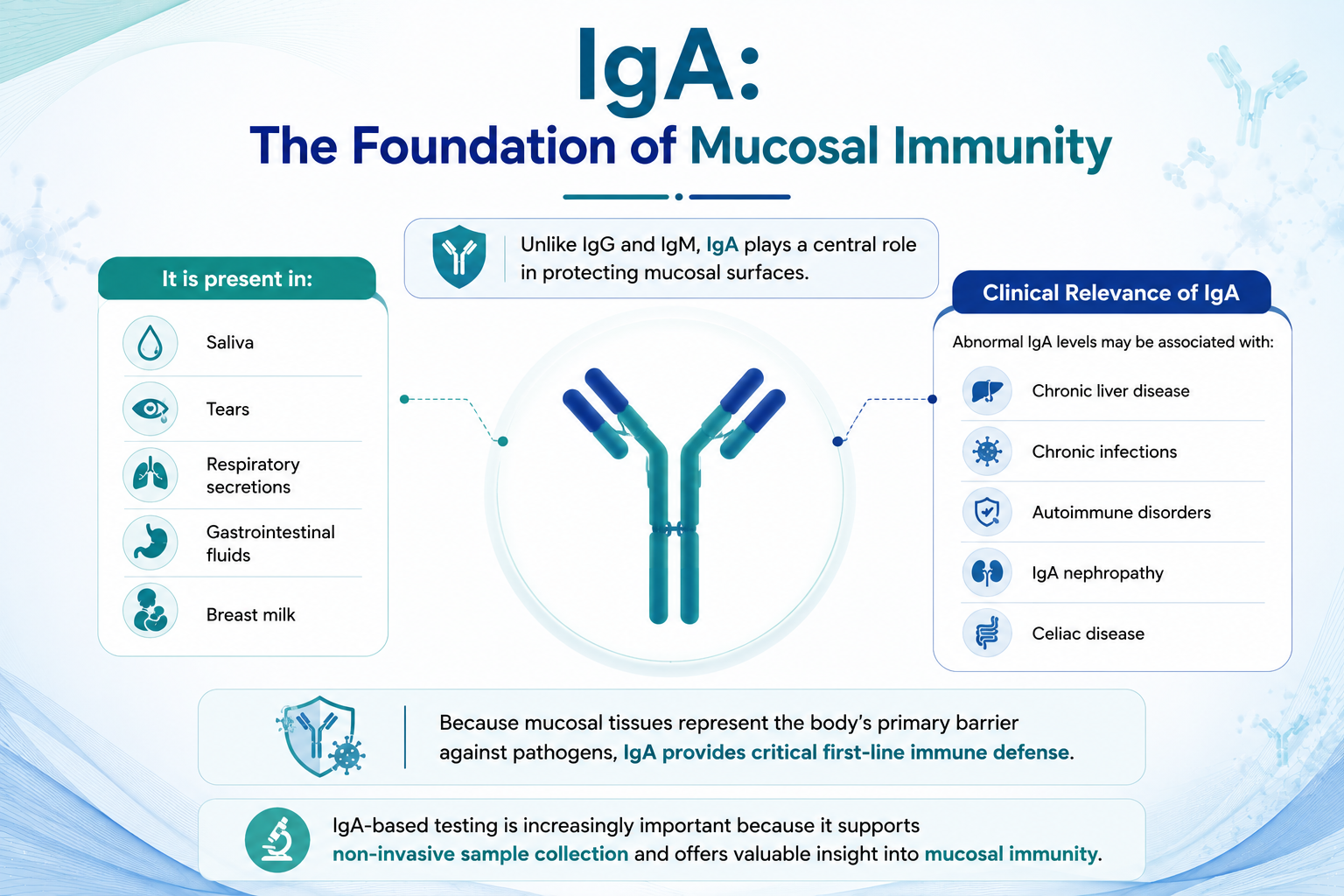
Because mucosal tissues represent the body's primary barrier against pathogens, IgA provides critical first-line immune defense.
Clinical Relevance of IgA
Abnormal IgA levels may be associated with:
- Chronic liver disease
- Chronic infections
- Autoimmune disorders
- IgA nephropathy
- Celiac disease
IgA-based testing is increasingly important because it supports non-invasive sample collection and offers valuable insight into mucosal immunity.
How Immunoglobulins Enable Modern IVD Assays
Immunoglobulins serve as the molecular recognition elements behind numerous diagnostic technologies.
Common assay formats include:
- ELISA
- Immunoprecipitation
- Agglutination assays
- Radioimmunoassays (RIA)
- Immunofluorescence
- Flow cytometry
- Immunoblotting
- Affinity chromatography
Why IgG Dominates Diagnostic Reagents
IgG molecules possess several characteristics that make them ideal for IVD:
- High stability
- Strong antigen affinity
- Excellent specificity
- Efficient toxin neutralization
- Agglutination capability
- Opsonization properties
Meanwhile:
- IgM supports acute-phase and early serology testing.
- IgA enables mucosal and non-invasive diagnostics.
Together, these immunoglobulins provide complementary information that improves diagnostic accuracy and clinical interpretation.
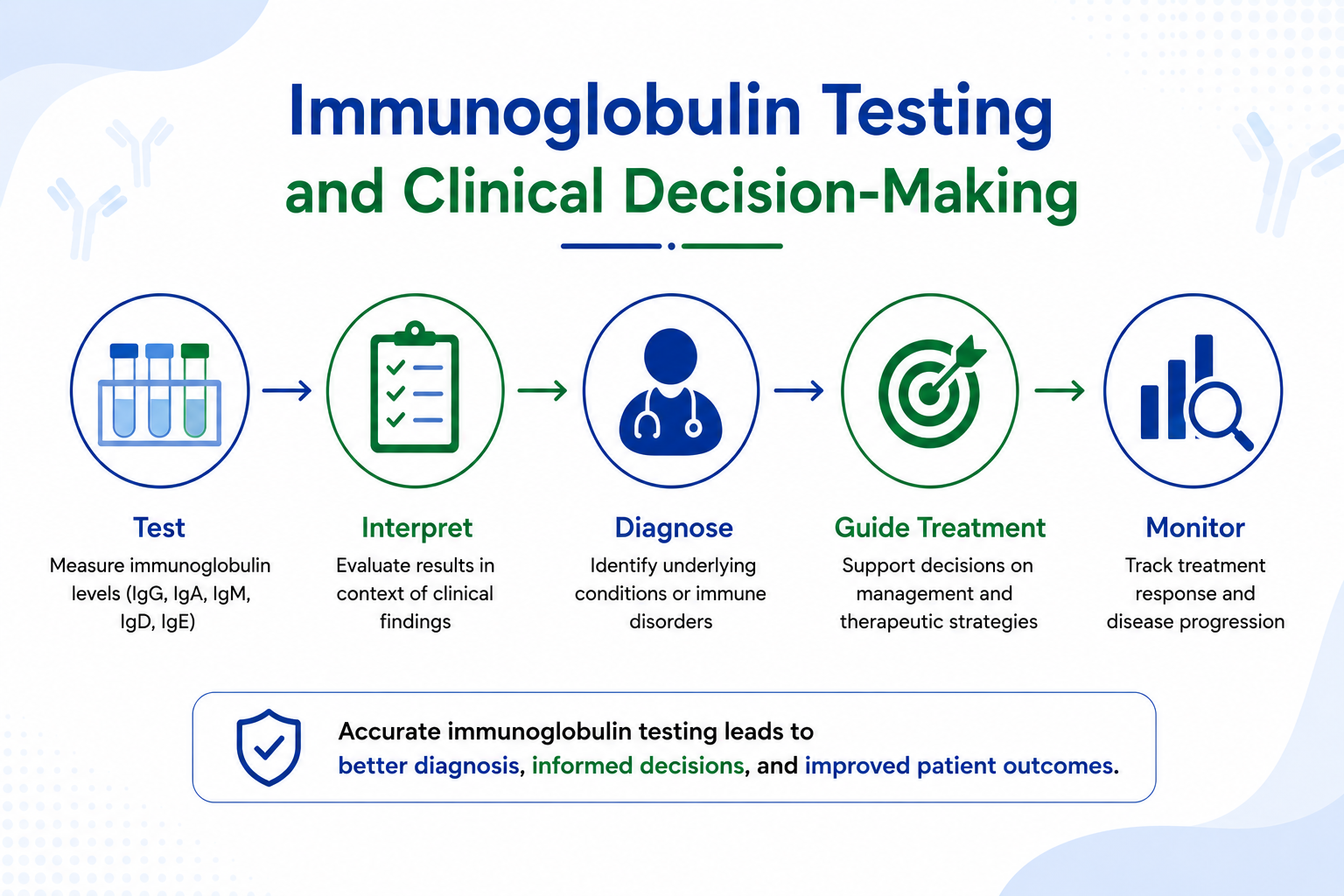
Immunoglobulin Testing and Clinical Decision-Making
Quantitative and qualitative immunoglobulin measurements provide important insight into immune function.
Elevated Immunoglobulin Levels May Indicate
- Chronic infections
- Autoimmune disorders
- Allergic diseases
- Liver disease
- Plasma cell disorders
- Cancer
Reduced Levels May Suggest
- Immunodeficiency
- B-cell dysfunction
- Protein loss syndromes
Immunoglobulin Testing Supports the Diagnosis and Monitoring of
- Recurrent infections
- Autoimmune diseases
- IgG4-related disease
- Kidney disorders
- Neurological conditions
- Hematological malignancies
Measurement of pathogen-specific IgG titers also helps determine protective immunity following vaccination or previous infection.
Immunoglobulins from Plasma: Essential Raw Materials for IVD Manufacturing
Although recombinant technologies continue to evolve, plasma-derived immunoglobulins remain an important source of diagnostic reagents.
Human plasma collected from individuals exposed to specific infectious diseases contains naturally generated antibodies with high affinity and clinical relevance.
Examples include plasma from individuals with:
- COVID-19
- Hepatitis infections
- Dengue fever
- TORCH infections
- Other pathogen-specific immune responses
These disease-state plasmas provide valuable sources of pathogen-specific IgG and IgM antibodies.
Applications in IVD Manufacturing
Plasma-derived immunoglobulins are used as:
- Capture reagents
- Detection reagents
- Reference standards
- Positive controls
- Calibration materials
They support:
- ELISA kits
- Lateral flow assays
- Automated immunoassays
Because these antibodies are generated through natural immune responses, they provide:
- Broad epitope recognition
- High affinity
- Strong clinical relevance
- Enhanced assay sensitivity
At Yashraj Biotechnology, expertise in plasma-derived biological materials and custom processing capabilities support the development of high-quality diagnostic reagents for infectious disease applications.
Modern Recombinant Immunoglobulins and YBL-Vega
As IVD requirements become increasingly stringent, engineered recombinant antibodies are becoming essential for ensuring consistency and scalability.
Recombinant immunoglobulins offer:
- Defined specificity
- Reduced batch variability
- Long-term reproducibility
- Scalable manufacturing

Yashraj Biotechnology's YBL-Vega platform enables fully animal-free discovery of high-affinity IgG, IgA, and IgM binders for difficult targets.
The platform combines:
- Large synthetic library diversity
- Phage display screening
- Sequence-defined reagents
- Flexible antibody formats
- Rapid 8–10 week discovery cycles
These capabilities are particularly valuable for:
- Weakly immunogenic antigens
- Toxic proteins
- Structurally complex targets
- Emerging infectious diseases
The resulting antibodies can be optimized for multiple diagnostic formats while maintaining long-term manufacturing consistency.
Conclusion: Immunoglobulins Remain the Hidden Engine of IVD
From acute infection detection to autoimmune disease monitoring and vaccine immunity assessment, immunoglobulins remain the molecular foundation of modern diagnostics.
IgG, IgM, and IgA provide complementary insights into immune status while enabling the development of highly sensitive and clinically meaningful diagnostic assays.
Whether sourced from immune plasma or generated through advanced recombinant technologies, immunoglobulins continue to drive innovation across the IVD industry.
As diagnostic platforms become more sophisticated and demand greater reproducibility and scalability, the quality of antibody reagents becomes increasingly important.
By combining expertise in plasma-derived biological materials with advanced platforms such as YBL-Vega, Yashraj Biotechnology is helping support the next generation of diagnostic reagents designed for precision, consistency, and clinical relevance.