.jpg)



.jpg)
The Supply Chain of Science: Ensuring Lot-to-Lot Consistency and Long-Term Stability in Bulk IVD Reagents
1. Introduction
The Invisible Backbone of Diagnostics
In the world of in-vitro diagnostics (IVD), accuracy is everything. Whether supporting infectious disease screening, immunology testing, or vaccine research, diagnostic reliability depends on one factor above all others: consistency in bulk reagents.
Behind every dependable diagnostic kit lies a complex scientific supply chain — raw material sourcing, validation, manufacturing precision, cold chain logistics, and long-term stability monitoring. A single deviation at any node in that chain can corrupt assay results downstream, erode customer confidence, and create compliance exposure.
As global healthcare systems demand faster, scalable, and more reproducible diagnostics, maintaining lot-to-lot consistency has become both a scientific and operational imperative. For bulk IVD raw material manufacturers, it is also the primary value proposition — and the hardest one to sustain at scale.
Yashraj Biotechnology Ltd. (YBL), headquartered in Navi Mumbai, has manufactured IVD raw materials for over three decades — native and recombinant antigens, monoclonal and polyclonal antibodies, and specialty proteins supplied to diagnostic kit manufacturers across more than 50 countries. That longevity in a precision-dependent industry is itself a consistency argument.
This article draws on that experience to examine how lot-to-lot consistency and long-term stability are achieved — and where the supply chain most often breaks down.
2. Raw Material & Vendor Stewardship
Managing Biological Variability
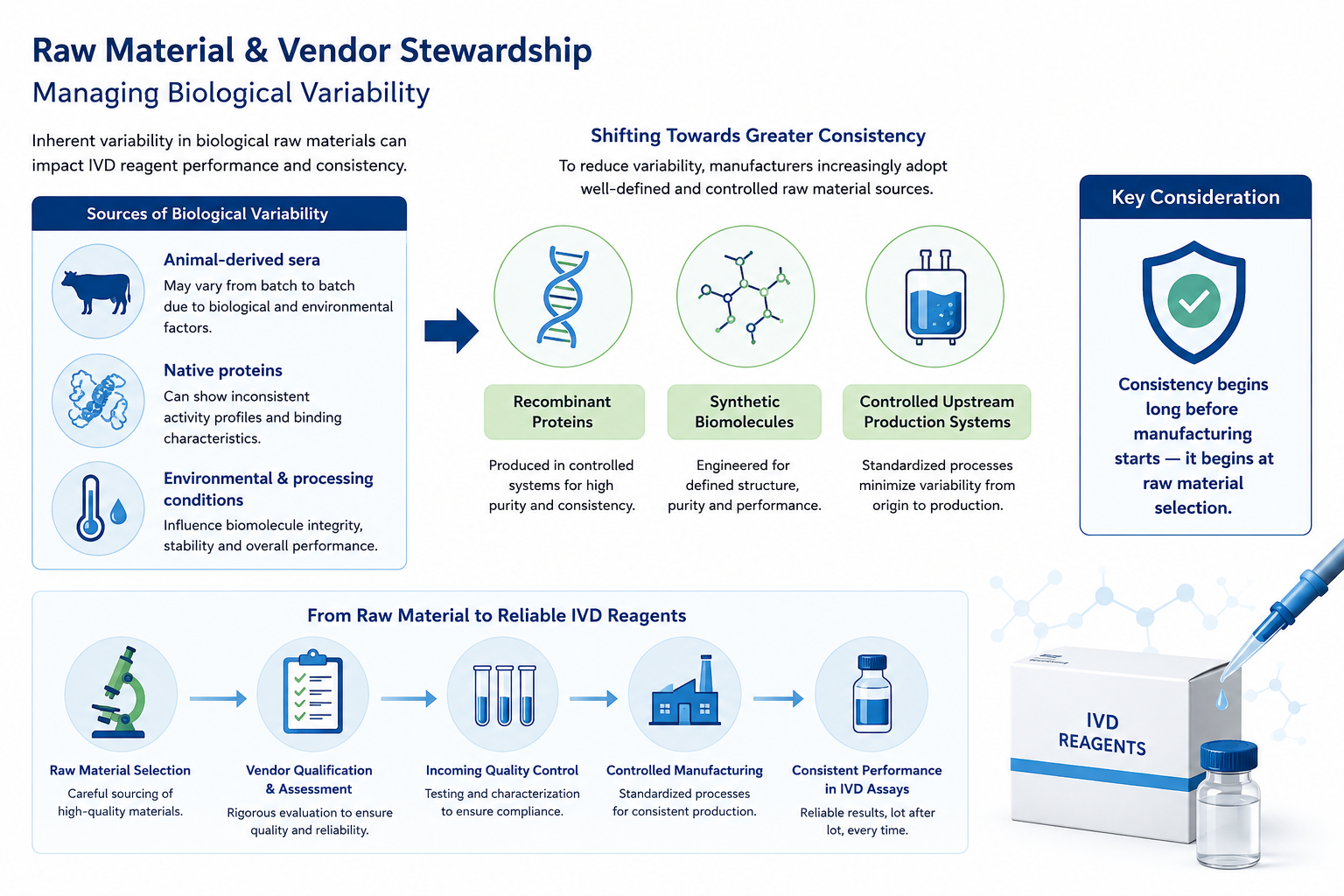
One of the biggest challenges in IVD manufacturing is the inherent variability of biological starting materials. Left unmanaged, this variability propagates through every downstream step — antigen coating, antibody conjugation, signal generation — and ultimately shows up as assay drift or lot failures at the customer's end.
Common sources of variability include:
- Animal-derived sera: batch-to-batch differences in protein composition and titer.
- Native proteins: inconsistent specific activity depending on source tissue and extraction conditions.
- Environmental and processing conditions: temperature excursions, freeze-thaw history, and pH shifts that alter biomolecule integrity.
To reduce this variability, the industry has moved toward recombinant proteins expressed in defined cell systems, synthetic biomolecules with fixed sequence identity, and controlled upstream production systems with documented process parameters.
The tradeoff — higher development cost for greater reproducibility — has become increasingly justifiable as kit manufacturers face tighter regulatory scrutiny and shorter development timelines.
YBL produces both native and recombinant antigens in-house, with upstream processes defined by fixed induction parameters, purification protocols, and activity acceptance criteria.
For recombinant formats — expressed in E. coli, yeast, or mammalian systems depending on the target — the ability to re-express from a defined master cell bank removes a significant source of inter-lot variance.
This dual capability also allows the team to advise customers on the right antigen format for a given assay chemistry, not just supply whatever is available.
Vendor Audits Beyond Documentation
Modern quality systems require deeper supplier oversight than a certificate of analysis review.
Supplier failures are often systemic — a change in a secondary raw material, a shift in an upstream process, or a lapse in environmental monitoring at a contract manufacturer. None of these show up on a CoA.
Best-practice oversight therefore includes:
- Physical site inspections at primary and secondary suppliers.
- Evaluation of secondary and tertiary inputs in the vendor's own supply chain.
- Manufacturing process verification rather than documentation review alone.
- Environmental monitoring data reviewed across seasonal cycles.
Strong vendor stewardship reduces the probability of hidden inconsistencies entering downstream production — inconsistencies that may not surface until a customer runs a lot comparison six months after delivery.
Batch Reservation Strategy
For critical assays — high-volume infectious disease panels, regulatory-submitted kits, or long development programs — manufacturers often reserve large-scale lots to support multi-year production runs.
The economics are straightforward: one large qualification effort spread across many kits beats repeated small-lot requalifications.
Benefits extend across the supply chain:
- Reduced inter-lot variability.
- Simplified validation.
- Cleaner regulatory submissions with fewer lot-change amendments.
- Stronger customer confidence in supply continuity.
YBL maintains a strategic lot reservation program for high-demand antigens and antibodies, allowing customers with volume-critical production to lock in a characterized lot for extended supply periods.
This is particularly relevant for monoclonal antibodies used as calibrators or capture reagents in sandwich assay formats, where a mid-run lot change carries significant revalidation burden.
3. Rigorous Analytical Characterization
Functional Titration Over Concentration Testing
A reagent that meets protein concentration specifications but fails in assay function is not a quality product — it is a source of false confidence.
High-quality IVD reagents are characterized not by how much protein is present but by what that protein does:
- Binding efficiency in the intended assay format.
- Specific activity against a defined reference standard.
- Enzyme functionality measured in activity units per mL rather than total protein.
- Signal performance in matched capture-detection antibody pairs.
This functional approach separates a raw material supplier from a raw material partner.
It ensures assay performance remains reproducible across production lots — and that a specification deviation is caught at the manufacturer's QC step, not at the end-user's stage.
YBL's release testing for antigens and antibodies is function-first: every released lot is characterized by ELISA titer, Western blot reactivity, and where applicable, lateral flow strip performance in a reference assay format.
Protein concentration alone is not a release criterion.
For antibody pairs, YBL provides pairing data to help customers select optimal capture and detection combinations before committing to manufacturing scale.
Building a Complete Traceability Matrix
Traceability is not simply a regulatory requirement.
In practice, it is the diagnostic tool that allows a manufacturer to isolate the root cause of a lot deviation without discarding an entire production campaign.
A well-constructed traceability matrix links:
- Finished kits to bulk reagent batches.
- Bulk batches to raw material lots.
- Raw material lots to production parameters.
- Environmental records at time of manufacture.
- QC data and release decisions.
- Distribution records.
When a deviation is reported — whether from a customer complaint, a field failure, or an internal audit — a complete matrix allows the investigation to be scoped and resolved in days rather than weeks.
In the absence of this structure, manufacturers often have no choice but to pull and retest across a wide range of potentially affected material, which is expensive and disruptive.
4. Stability & Environmental Protection
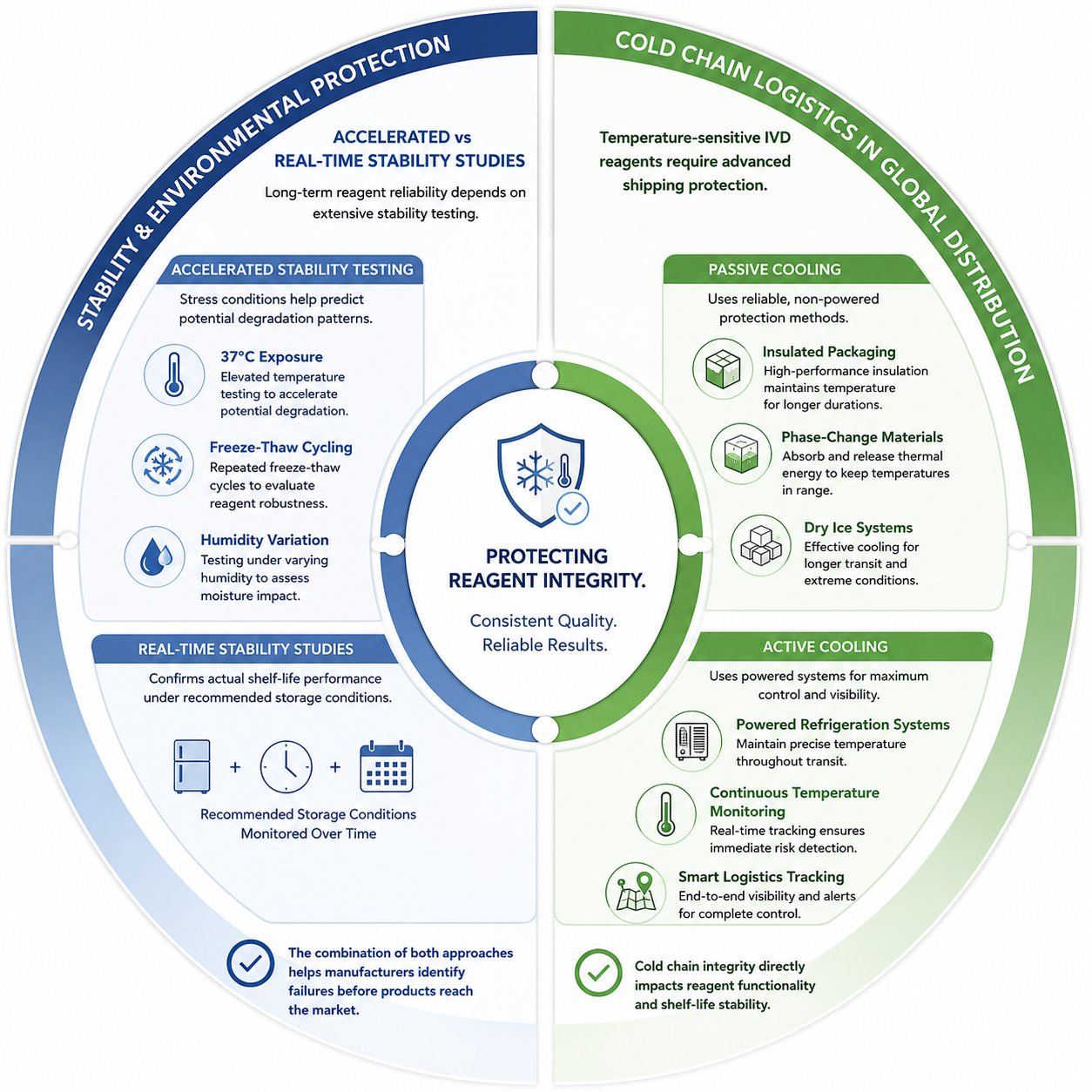
Accelerated vs. Real-Time Stability Studies
Long-term reagent reliability does not come from assumptions — it comes from data.
Stability programs for IVD raw materials run on two parallel tracks, each serving a different purpose.
Accelerated Stability Testing
Stress conditions are used to force and observe degradation mechanisms:
- Elevated temperature exposure at 37°C or 45°C to model long-term storage under compressed timelines.
- Freeze-thaw cycling to evaluate cryoprotectant formulations.
- Humidity variation to assess lyophilized product performance.
Accelerated data provides early warning of instability risks and guides formulation decisions before a two-year real-time study reaches conclusion.
Real-Time Stability Studies
Actual shelf-life claims are established from real-time data collected under recommended storage conditions — typically 2–8°C for liquid reagents or ambient temperature for lyophilized formats.
These studies confirm that accelerated predictions hold under actual-use conditions.
Together, both approaches allow manufacturers to identify failures before products reach the market and to assign defensible shelf-life claims that hold up under regulatory review.
YBL runs formal stability programs across its native and recombinant antigen portfolio, with real-time monitoring data supporting the shelf-life claims stated on product documentation.
Stability profiles — binding activity over time, aggregation by SEC, and functional titer at defined intervals — are available on request for critical-use reagents.
For customers with long manufacturing cycles or multi-year kit shelf-life targets, stability data packages can be aligned with the customer's own regulatory submission timelines.
Cold Chain Logistics in Global Distribution
Temperature-sensitive IVD reagents require more than adequate packaging — they require a documented cold chain with monitoring data that travels with the shipment.
A reagent that arrives within specification on paper but experienced a 12-hour ambient excursion in transit is not a reagent a manufacturer can defend at audit.
Cold chain integrity is not a logistics function; it is part of the product specification.
Passive Cooling Systems
- Insulated packaging with validated thermal performance profiles.
- Phase-change materials calibrated for specific temperature zones (2–8°C, −20°C).
- Dry ice systems for frozen products.
Active Cooling & Monitoring
- Powered refrigeration for large-volume shipments.
- Continuous temperature data loggers included with each shipment.
- Smart logistics tracking with excursion alerts.
YBL ships globally with validated packaging configurations for each product class.
Shipments for temperature-sensitive antigens and antibodies include calibrated cold packs and data loggers, with post-delivery temperature confirmation built into the receipt workflow.
For customers in regions with longer transit times or high ambient temperatures — common across South and Southeast Asia and parts of Africa — routing is selected in coordination with freight partners to minimize excursion risk.
5. Quality Control & Validation
The "Golden Lot" Standard
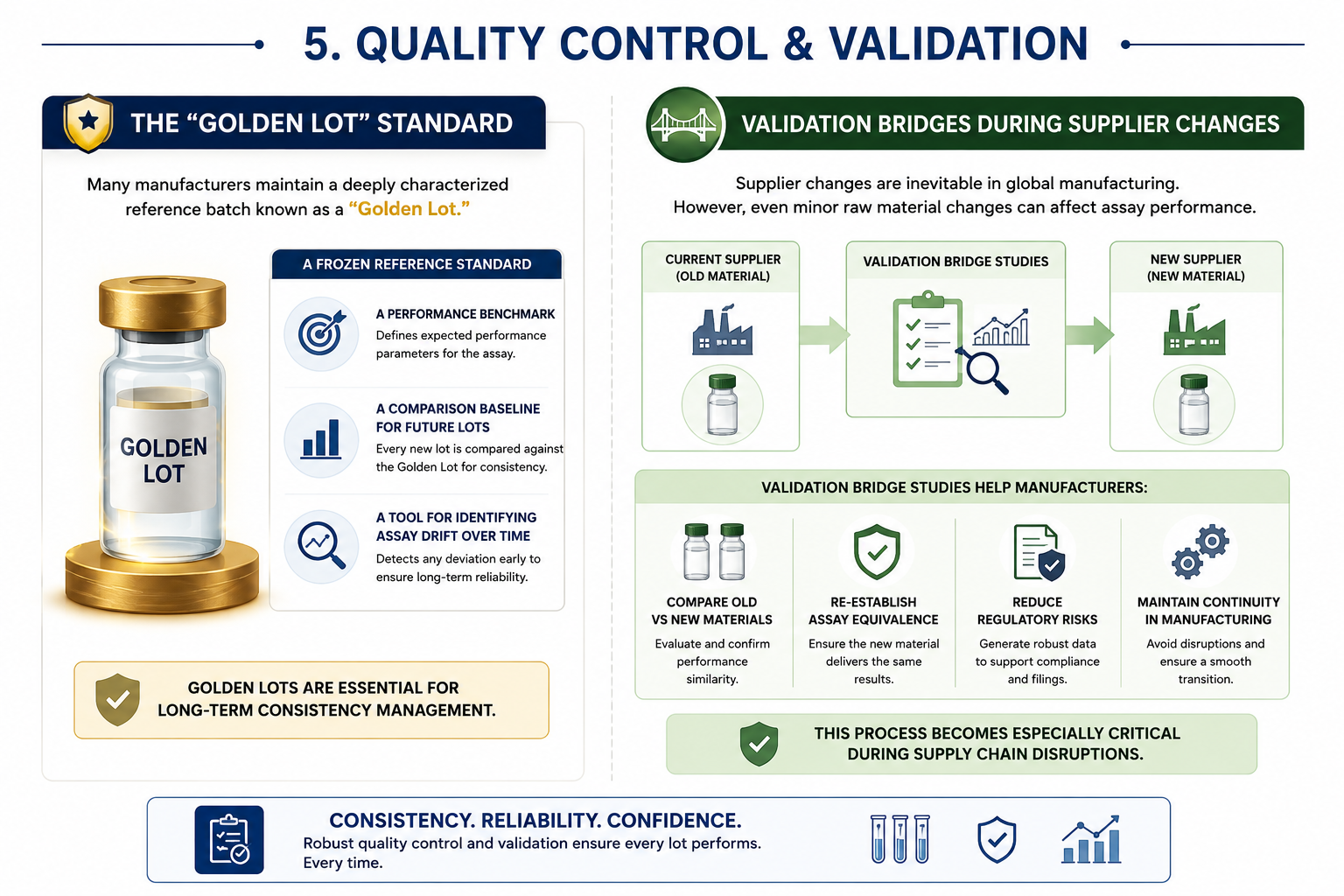
The concept of a Golden Lot — a deeply characterized, frozen reference batch — is one of the most practical tools in long-term consistency management.
It is not a regulatory construct; it is an operational discipline.
A Golden Lot serves as:
- A fixed performance benchmark against which every new production lot is compared.
- A baseline for detecting assay drift over time in long-running product lines.
- A comparator for bridging studies when supplier changes or process modifications occur.
Without a Golden Lot, lot-to-lot comparisons are relative — each lot is only as good as the last.
With one, they are absolute.
This distinction matters when a customer asks whether a new lot will perform the same as the material their assay was developed on two years prior.
YBL maintains characterized reference lots for its core antigen and antibody products, held under controlled cryogenic conditions and pulled periodically for comparative testing as part of ongoing QC.
When a customer reports a performance concern with a new lot, the QC team can run side-by-side comparisons against the reference lot to determine whether the issue originates at the material level or in the customer's process.
Validation Bridges During Supplier or Process Changes
Supplier changes are inevitable. Raw material availability shifts, contracts end, and process improvements sometimes require switching to a new input source.
The regulatory and operational risk is real: even a minor raw material change can alter assay performance in ways that are not immediately obvious in standard QC testing.
Validation bridge studies are the mechanism for managing this risk.
A proper bridge study:
- Runs old and new materials in parallel against the reference assay.
- Covers the range of analyte concentrations clinically relevant to the kit.
- Documents equivalence within predefined acceptance limits.
- Produces data that can support regulatory notifications or submissions if required.
This process is especially critical during supply chain disruptions, when pressure to move quickly is highest and the temptation to skip steps is strongest.
When YBL introduces a new production lot of a critical raw material, bridge testing against the existing reference lot is standard practice before release.
Customers receive CoA data alongside comparator testing results for the most common assay formats.
For customers with submitted regulatory dossiers, bridge data can be provided in a format structured to support change notification filings.
6. Manufacturing Scalability
Aseptic Processing Without Harsh Preservatives
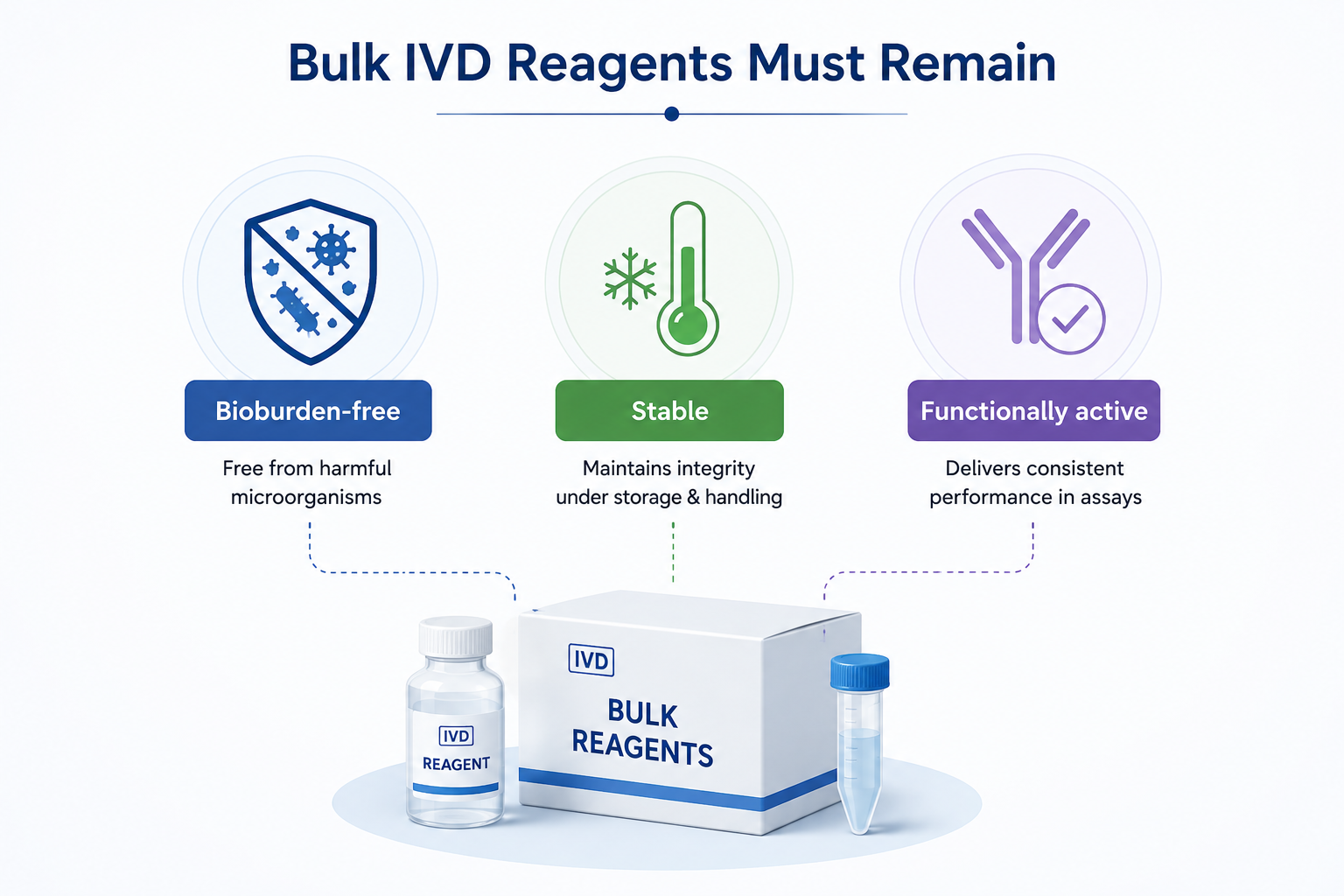
Bulk IVD reagents must be bioburden-free, stable, and functionally active — without leaning on preservatives that interfere with assay sensitivity.
Sodium azide inhibits horseradish peroxidase, one of the most common enzyme labels in IVD.
Thimerosal raises toxicity and regulatory concerns.
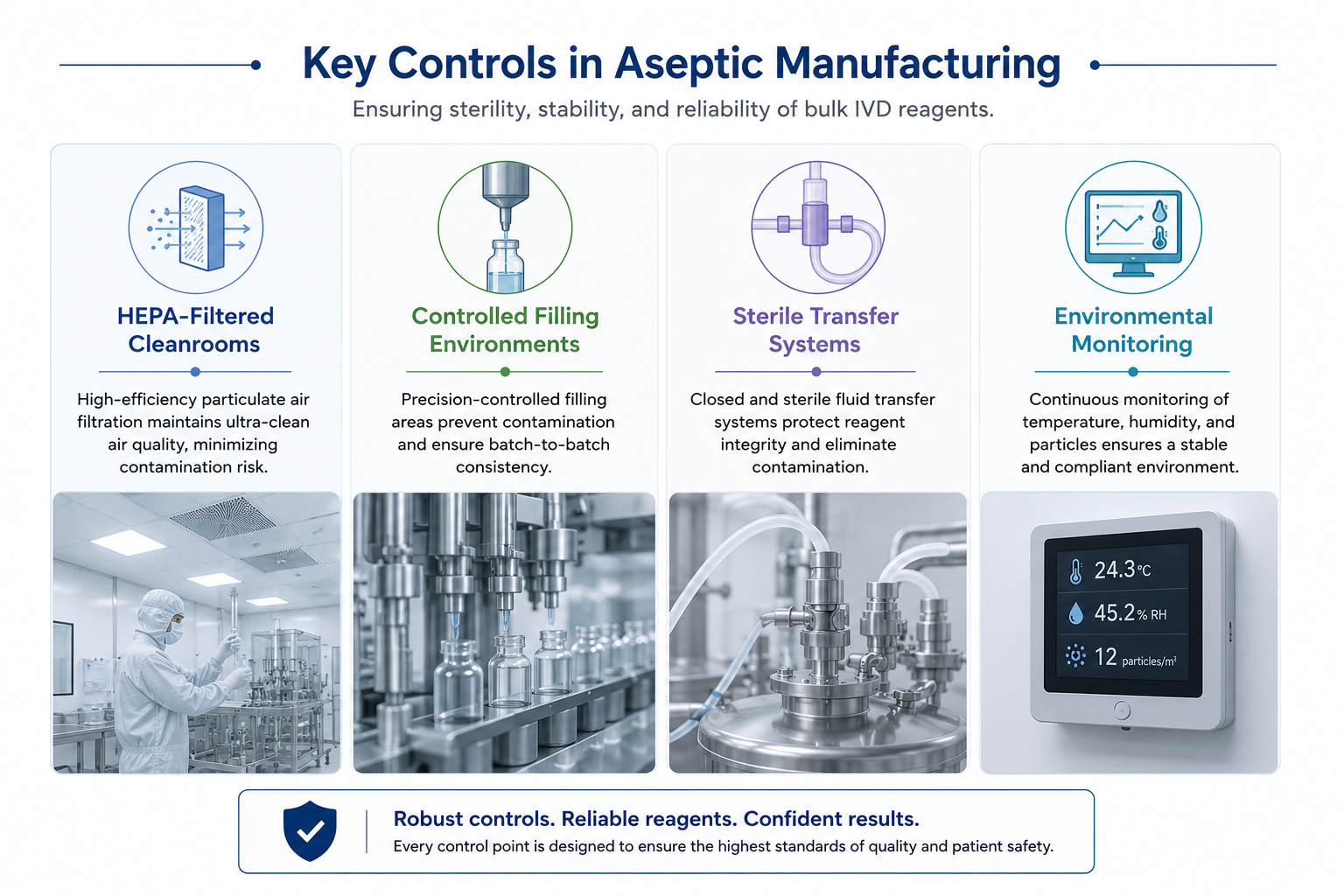
The alternative is aseptic processing, which achieves sterility through environmental controls rather than chemical intervention.
Key controls include HEPA-filtered ISO-classified cleanrooms, controlled filling environments with ongoing environmental monitoring, sterile-filtered bulk preparation and closed-system transfer, and periodic bioburden and endotoxin testing for products requiring parenteral-grade specifications.
YBL's manufacturing facility operates under ISO 9001:2015 and ISO 13485:2016 certified quality management systems, with antigen and antibody production carried out in controlled cleanroom environments.
Customers requiring endotoxin-tested material for specific assay applications can request testing data at the point of order.
Filling Accuracy & High-Value Liquid Management
Biological reagents are expensive to produce.
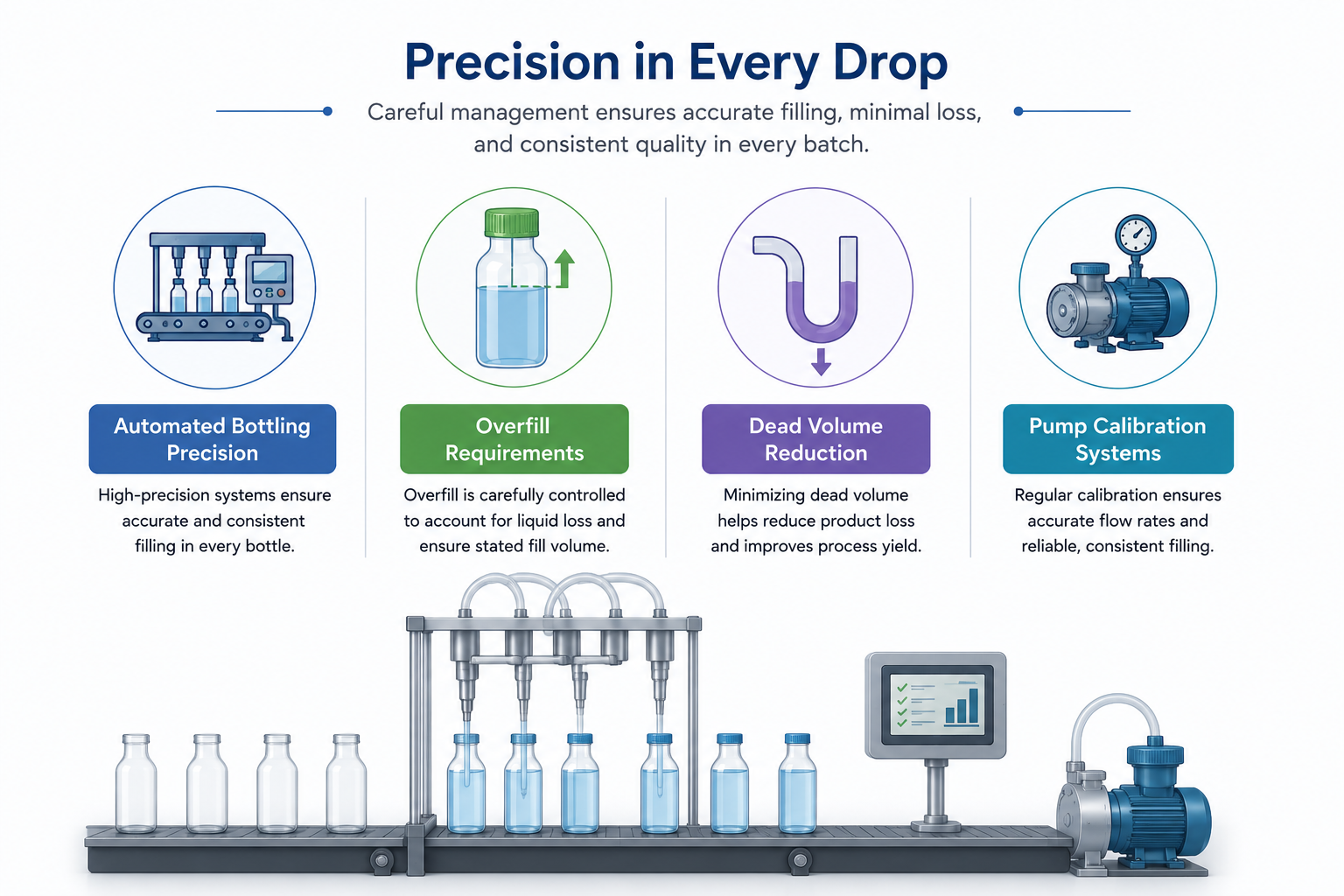
Even small filling losses can significantly impact production economics when working with high-value proteins — particularly monoclonal antibodies and specialty recombinant antigens that may take weeks to produce and qualify.
Manufacturers address this through:
- Gravimetric or volumetric verification at the filling line.
- Calibrated overfill allowances that meet label claim without excessive waste.
- Dead volume reduction in line design.
- In-process weight checks to catch drift before it becomes a batch failure.
Filling precision is not just a quality issue — it is a yield issue.
For customers ordering bulk material by the milligram or milliliter, fill accuracy directly determines how many kits can be manufactured from a given purchase quantity.
7. The Future of Reagent Supply Chain Reliability
Emerging technologies are reshaping how IVD raw material manufacturers approach consistency and stability.
Several trends are worth tracking:
- AI-driven quality analytics: statistical process control models that flag drift before it reaches out-of-specification territory.
- Predictive stability modeling: in silico tools that accelerate formulation development by predicting degradation kinetics from accelerated study data.
- Smart cold-chain monitoring: IoT-enabled tracking with real-time excursion alerts and automated deviation reports.
- Digital traceability systems: serialization approaches that create immutable lot records from raw material through to end-user.
- Advanced recombinant reagent platforms: VHH (nanobody) formats, phage display-derived antibodies, and novel protein scaffolds that offer greater batch reproducibility than conventional hybridoma-derived monoclonals.
YBL is expanding its recombinant antigen and VHH antibody portfolios with precisely this in mind.
Recombinant formats expressed from a defined master cell bank — fixed sequence, fixed process — represent the closest the IVD industry gets to a biological constant, and the reproducibility advantages compound across a product's commercial lifetime.
As global diagnostics continue evolving — driven by point-of-care expansion, multiplex assay formats, and tighter regulatory scrutiny — supply chain reliability will remain the load-bearing structure under every performance claim a diagnostic manufacturer makes.
8. Conclusion
In modern diagnostics, scientific innovation alone is not enough.
A novel assay chemistry runs on raw materials, and raw materials are only as reliable as the systems behind them — the upstream process controls, the analytical characterization, the stability data, the cold chain, and the quality management framework that ties it all together.
Lot-to-lot consistency and long-term stability are not product features.
They are the result of deliberate design decisions made at every stage of the reagent supply chain — decisions that compound into either confidence or variance at the assay level.
With over three decades in IVD raw material manufacturing, ISO 13485-certified production, and a global distribution footprint spanning more than 50 countries, Yashraj Biotechnology continues building the infrastructure behind that confidence.
For diagnostic kit manufacturers looking for a raw material partner invested in their assay performance — not just their purchase order — YBL's antigen and antibody portfolio is a starting point worth evaluating.
Learn more at: www.yashraj.com

Subscribe to YBL Monthly Digital Newsletter
Stay connected with Yashraj Biotechnology Ltd. (YBL) for the latest updates, innovations, news and upcoming events.