.jpg)


Cell Line Generation
In-House Primary Cells & iPSC Generation Services

.png)
From consented donor tissue to disease-ready iPSC models, under one roof
Drug development stalls when the biology in front of you doesn't look like the biology in your patient. YBL-IDD builds the human cell models that close that gap — primary skin cells and induced pluripotent stem cells (iPSCs), sourced from consented donors, characterized to a defined standard, and differentiated into the lineage your program needs.
Everything starts with an in-house institutional ethics committee. That means donor recruitment, consent, and tissue collection happen inside a governed process from day one, not bolted on after the fact. It's what lets us go from donor to cryopreserved, assay-ready cells without handing your project off between vendors.

From donor sample to differentiated cell, one quality bar throughout
Primary skin cells — isolated from consented donor skin biopsies as normal human epidermal keratinocytes (NHEK), normal human epidermal melanocytes (NHEM), or normal human dermal fibroblasts (NHDF).
iPSCs — reprogrammed from consented donor blood via integration-free Sendai delivery of the four Yamanaka factors, clearing of viral footprint on serial passage. Differentiated on request into cardiomyocytes (cardiotoxicity, electrophysiology), hepatocytes (metabolism, hepatotoxicity), or sensory neurons (pain pathway, neurotoxicity).
Every batch, primary, iPSC, or differentiated, only reaches the bank after it clears functional marker expression, viability, cell type-specific assay performance, and bioburden screening. What you receive is a documented, cryopreserved line, not one you have to re-validate before you trust the data.
Disease modeling, built on the real genetic background
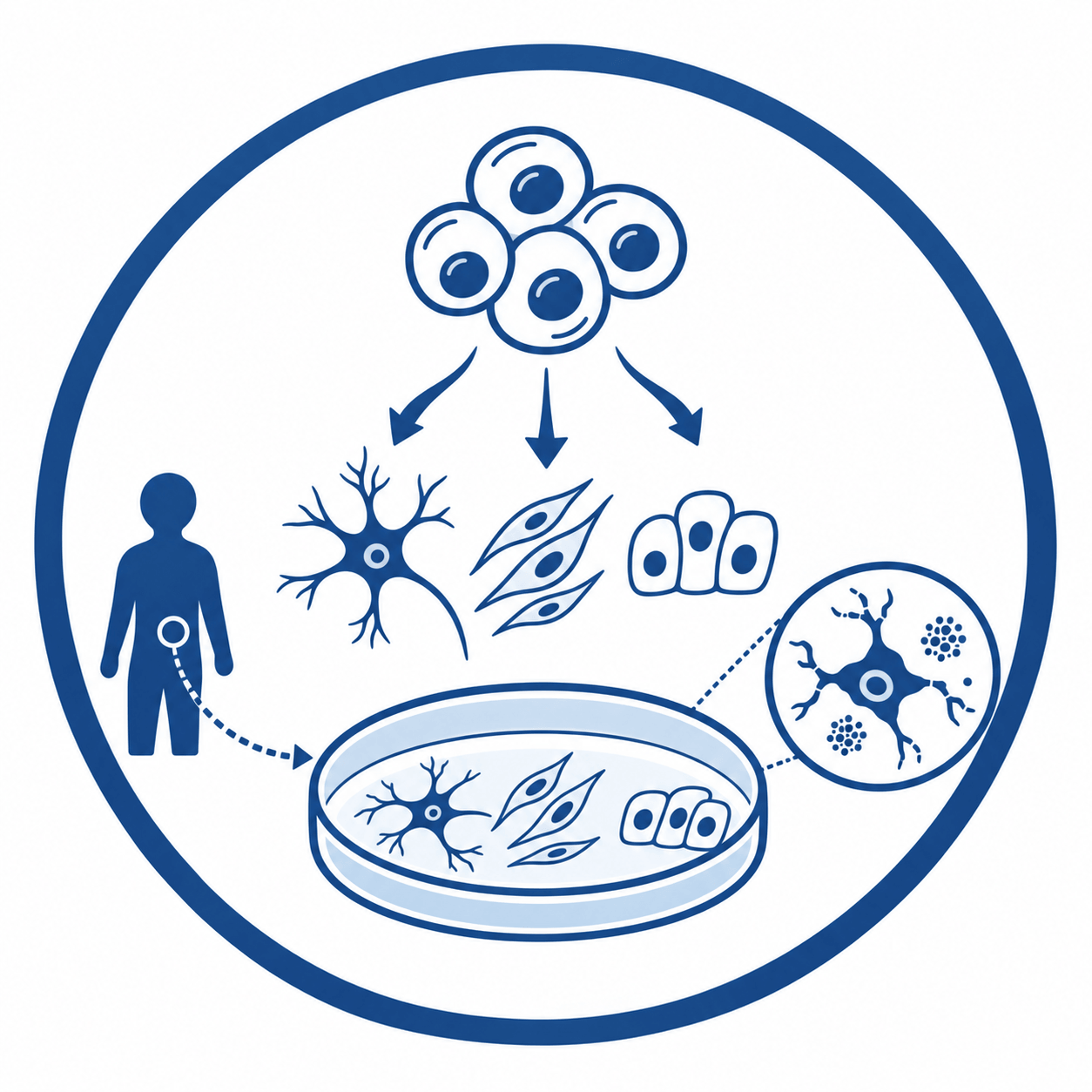
Some questions can't be answered in a healthy background. When your program needs to study a genetic disorder, we extend the same pipeline to diseased-patient blood samples: consented collection from patients carrying the mutation of interest, PBMC isolation, Sendai reprogramming to iPSC, and differentiation into the affected cell type.
The result is a disease model built from the genetic background it's meant to represent — a dish that carries the patient's own mutation into the assay, rather than a healthy line with a variant introduced after the fact. That distinction matters when you're trying to understand disease mechanism or screen a compound against the biology it will need to treat.
Get started
Tell us the cell type, the donor criteria, and the downstream application, and we'll scope a project timeline.