OECD Non-Animal Skin Assays
Skin Irritation & Corrosion Testing using In Vitro RhE Models


Non-animal skin corrosion and irritation testing
YBL-IDD offers OECD TG 431 and TG 439 skin assays with reconstructed human epidermis (RhE) model for testing molecules & formulations for cosmetic and dermatological applications. Standard study report is available within only two weeks from the day the RhE tissues arrive in the lab.

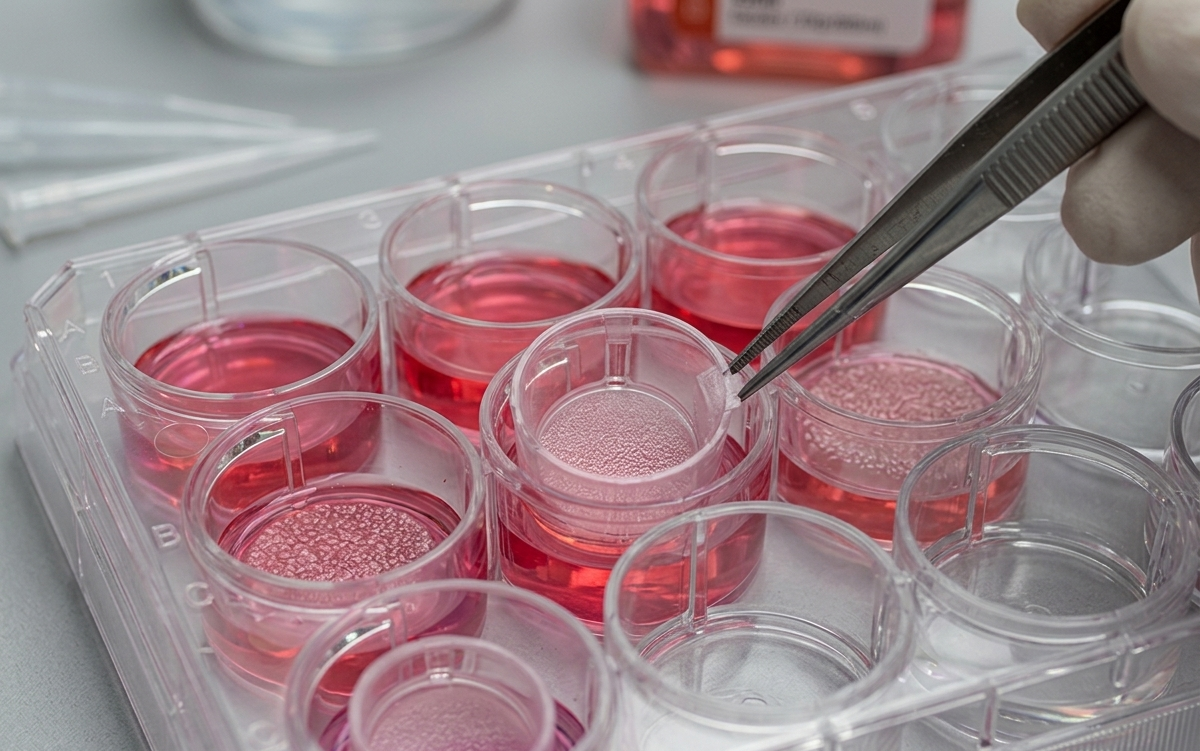 RhE tissue samples in transwell-inserts in culture for OECD skin assays.
Why non-animal skin testing
Skin irritation and corrosion were long assessed on rabbit skin under OECD TG 404. The OECD has since adopted reconstructed human epidermis (RhE) methods that answer the same hazard questions without animals. TG 431 covers corrosion and TG 439 covers irritation. Both use tissue built from human keratinocytes, with a functional stratum corneum, so the test substance meets a human barrier at full formulation strength.
Both guidelines read the same biological signal. Corrosive and irritant substances damage the outer epidermal layers, and that damage lowers the metabolic activity of the tissue. We measure it with the MTT assay and compare treated tissue with negative controls.
OECD Skin Assays: At a Glance
| TG 431 : Skin Corrosion | TG 439: Skin Irritation | |
|---|---|---|
| Test System | 3D reconstructed human epidermis from human keratinocytes | |
| Plate Format | 24-well | |
| Readout | MTT Assay (Cell Viability) | |
| Replicates | n = 2 | n = 3 |
| Time Points | Two exposure time points | One exposure time point |
| Result | Corrosive or non-corrosive | Irritant (UN GHS Category 2) or no category |
| Positive Control | 8N KOH | 5% SDS |
| Negative Control | Water | PBS |
| Capacity | Two test substances per 24-well plate, or one if the substance interferes with MTT | |
| Turnaround | About 2 weeks from tissue arrival in our lab | |
Study workflow
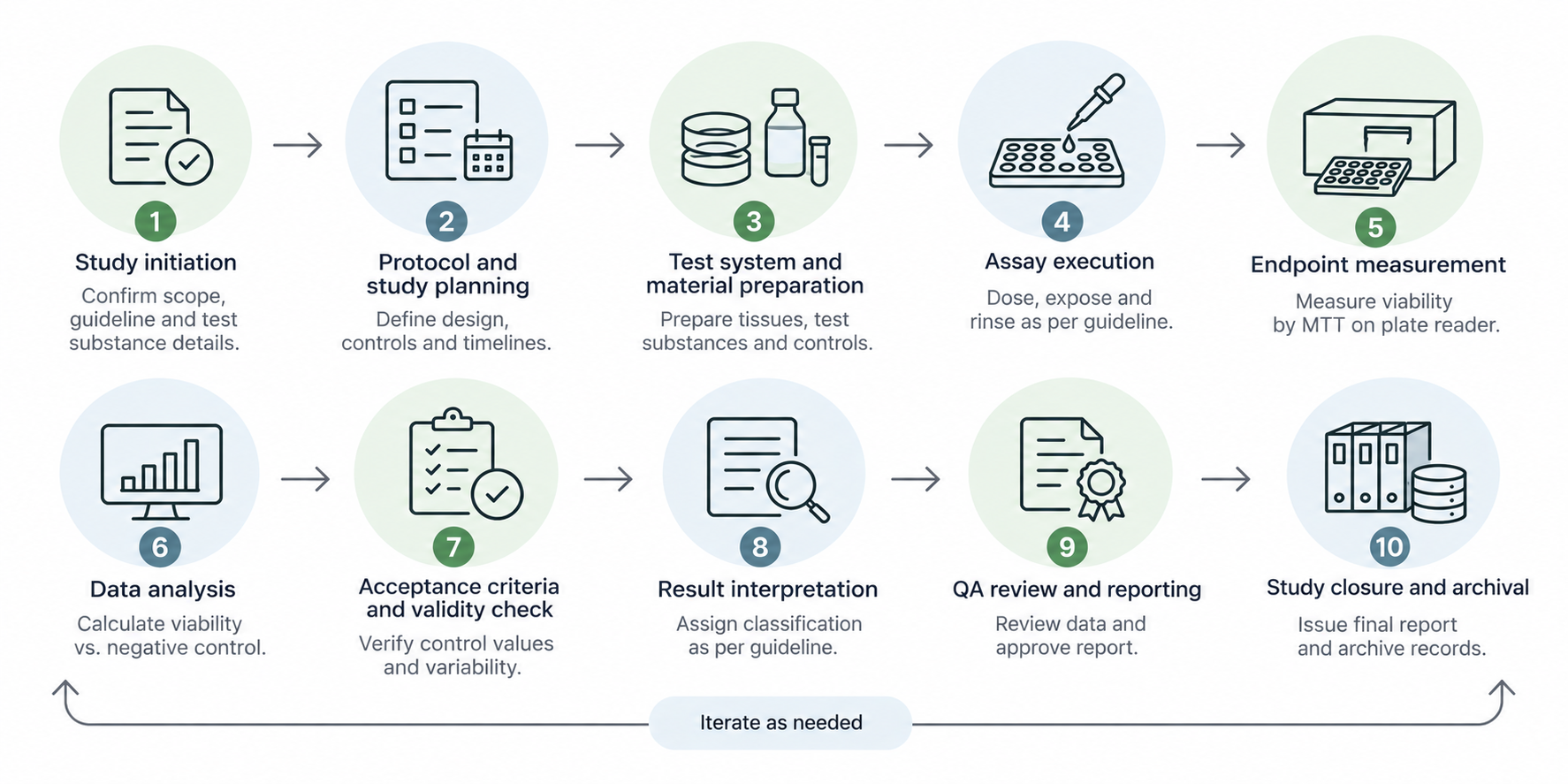
Every study follows the same ten stages, from the first conversation to archival of the raw data.
Samples & Deliverables
What to send
Come to us with the substance in the form you have. We discuss the form, quantity and study plan together before anything is scheduled. A safety data sheet and any known information on pH, solubility and colour help us plan.
What you receive
- Viability for every tissue, with control data
- Validity check against acceptance criteria
- Classification call with the rule applied
- QA-approved study report
Frequently-Asked Questions
-
Do I need both TG 431 and TG 439 ?
Regulatory needs vary. For a full corrosion and irritation classification, the two tests together cover both questions.
-
How long does a study take?
About two weeks from the day the reconstructed tissue arrives in our lab. The first week covers processing and the second covers review and QA approval.
-
How many compounds can you test at once?
Two per 24-well plate when the substance does not interfere with MTT, and one when it does.
-
What if my substance interferes with MTT?
We run killed-tissue controls alongside the living tissue to correct the reading. This is why such studies take a full plate.
-
What form does my substance need to be
Come to us with what you have. We discuss the form and quantity with you and agree the study plan together.
-
Which readout do you provide?
MTT, for both guidelines
-
Which tissue model do you use?
Reconstructed Human Epidermis (RhE); It is covered by guideline
Send us your test substance
Tell us what it is and where the data is going. We reply with a feasibility check and a quote.