.jpg)



Native vs. Recombinant Antigens: Why Your Choice of Antigen Material Could Make or Break Diagnostic Accuracy
Introduction: Diagnostic Accuracy Begins with the Right Antigen
Every successful in vitro diagnostic (IVD) assay starts with one fundamental component—the antigen. Whether developing ELISA kits, chemiluminescent immunoassays, lateral flow devices, or automated diagnostic platforms, the choice of antigen directly influences assay sensitivity, specificity, reproducibility, and clinical reliability.
For IVD manufacturers, selecting between native and recombinant antigens is often viewed as a technical or manufacturing decision. Recombinant proteins offer scalability, controlled production, and simplified manufacturing workflows, making them an attractive option for many applications. However, growing scientific evidence suggests that when the objective is to achieve the highest possible diagnostic accuracy—particularly for calibrators, controls, and clinically relevant immunoassays—native antigens often provide distinct advantages.
Recent peer-reviewed studies have demonstrated that native antigens more accurately represent the biological complexity found in patient samples. Their authentic protein structure, post-translational modifications, and natural epitope diversity contribute to stronger clinical correlation and improved assay performance.
As the IVD industry moves toward more precise, standardized, and clinically meaningful diagnostics, understanding the differences between native and recombinant antigens has become increasingly important. This article explores the scientific principles behind both antigen types, their impact on assay performance, and why native biological materials continue to play a vital role in modern diagnostic development.
What Is the Difference Between Native and Recombinant Antigens?
Although both native and recombinant antigens are designed to interact with antibodies in diagnostic assays, they differ significantly in origin, biological composition, and physiological relevance.
Native antigens
Native antigens are purified directly from their natural biological sources, including human plasma, serum, tissues, body fluids, or infected cell cultures. Because they originate from living biological systems, they retain the molecular characteristics naturally present in human disease
These characteristics include:
- Authentic three-dimensional protein folding
- Natural post-translational modifications (PTMs)
- Physiological glycosylation patterns
- Multiple naturally occurring protein isoforms
- Broad conformational and linear epitope diversity
In essence, native antigens closely resemble the molecules encountered by the patient's immune system, making them highly representative of real clinical samples
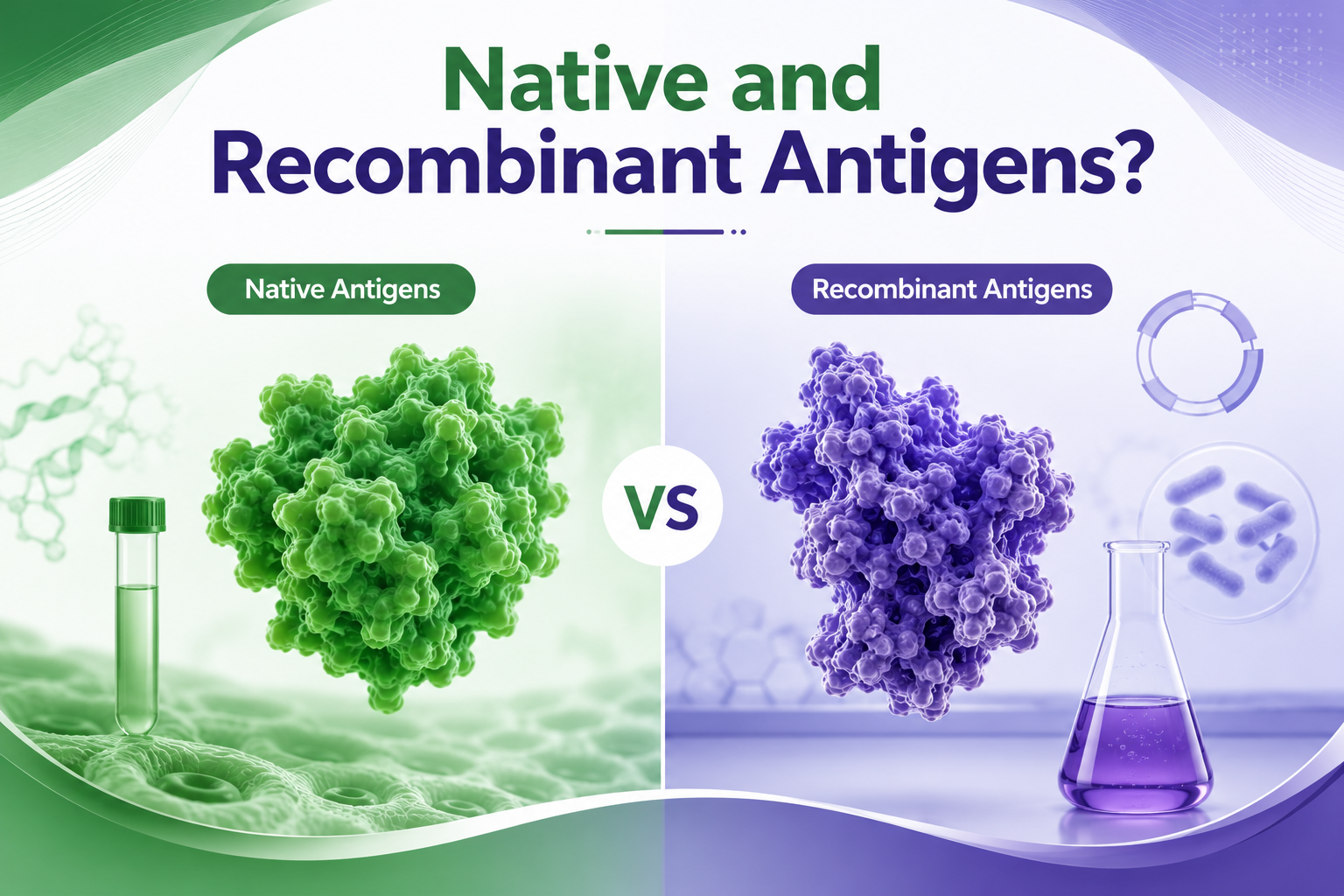
Recombinant Antigens
Recombinant antigens are produced through genetic engineering using host expression systems such as Escherichia coli, yeast, insect cells, or mammalian cell cultures. This approach enables large-scale manufacturing and consistent production while reducing dependence on biological source materials.
Recombinant proteins provide several advantages, including improved scalability, lot-to-lot manufacturing consistency, and easier supply chain management. However, they may not fully reproduce the structural complexity of naturally occurring human proteins.
Depending on the expression system, recombinant proteins may differ from native antigens in:
- Glycosylation patterns
- Protein folding
- Epitope presentation
- Biological activity
- Post-translational modifications
These molecular differences can influence antibody recognition and ultimately affect diagnostic performance.
Why Native Antigens Often Deliver Better Diagnostic Accuracy
One of the primary goals of any diagnostic assay is to replicate as closely as possible the biological conditions found in patient samples. Scientific studies comparing native and recombinant antigens consistently demonstrate that native antigens often provide stronger clinical correlation because they preserve the natural molecular architecture of disease-associated proteins
Superior Clinical Sensitivity
Several published studies have reported improved sensitivity when native antigens are used in serological assays.
For example, in echinococcosis diagnostics, native hydatid cyst fluid antigen demonstrated approximately 92.9% sensitivity, compared with 77.9% for recombinant antigen B. Such differences can significantly affect clinical detection rates, particularly in screening programs where minimizing false-negative results is essential.
Similarly, studies evaluating Chikungunya virus diagnostics found that native antigens achieved greater than 90% concordance for detecting virus-specific IgM antibodies. Investigations during SARS-CoV-2 assay development also highlighted the improved diagnostic performance of assays utilizing whole native antigen preparations compared with simplified recombinant proteins.
These findings suggest that native antigens better capture the diversity of antibody responses observed in real patient populations.
Why Epitope Diversity Matters
The immune response generated during infection or disease is rarely directed toward a single molecular site. Instead, patients develop polyclonal antibody responses, recognizing multiple regions—or epitopes—across a target antigen.
Native antigens naturally preserve this complexity
They present:
- Linear epitopes
- Conformational epitopes
- Glycan-dependent epitopes
- Naturally processed antigenic regions
Because of this diversity, native antigens are more likely to interact with the wide range of antibodies present in patient samples.
Recombinant proteins, particularly those produced in simplified expression systems, may expose only a limited subset of these epitopes. Consequently, important antibody-binding regions may be absent or structurally altered, reducing assay sensitivity in certain patient populations.
For diagnostic manufacturers developing serological assays, maintaining broad epitope representation is essential for accurately detecting naturally occurring immune responses.
Why Post-Translational Modifications Matter
Proteins undergo numerous biochemical modifications after synthesis, collectively known as post-translational modifications (PTMs). These modifications influence protein structure, stability, biological function, and antibody recognition.
Human proteins exhibit hundreds of distinct PTMs, including:
- Glycosylation
- Phosphorylation
- Acetylation
- Sulfation
- Proteolytic processing
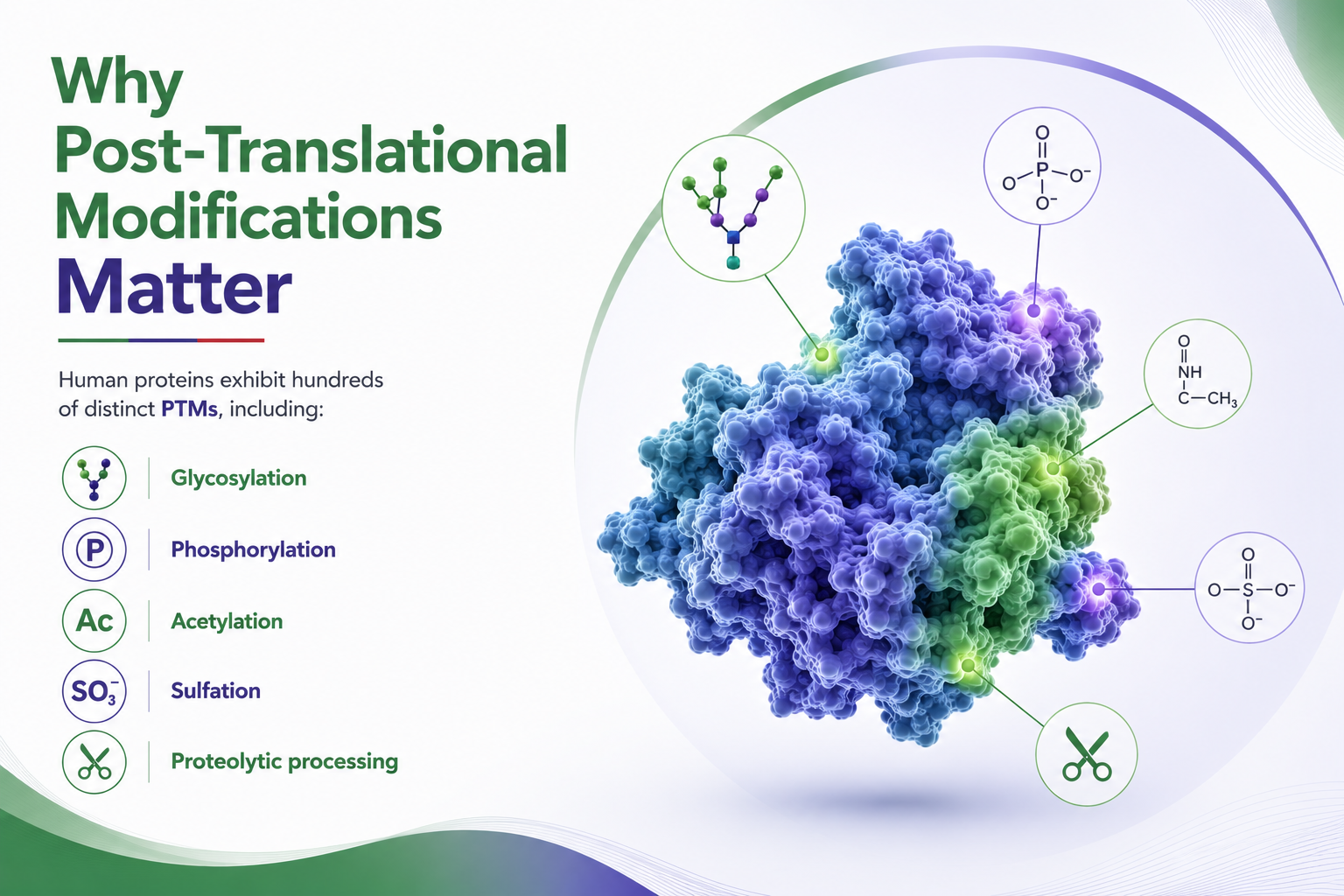
Among these, glycosylation is particularly important in diagnostic applications because many clinically relevant antibodies recognize glycan-dependent epitopes.
Native antigens retain these authentic modifications because they originate directly from human biological sources.
Recombinant proteins, however, inherit the modification patterns of their host expression systems.
For example:
- E. coli lacks the ability to perform glycosylation.
- Yeast produces high-mannose glycans that differ substantially from human glycosylation.
- Insect cells generate simplified glycan structures.
- Mammalian expression systems, although more physiologically relevant, may still differ from naturally occurring human proteins.
These differences can alter antibody binding and reduce assay performance.
Research has shown that disease-associated glycosylation patterns serve as important biomarkers in oncology, autoimmune diseases, and infectious diseases. If these modifications are absent or altered, diagnostic assays may fail to recognize clinically significant antibody responses accurately.
For this reason, preserving authentic post-translational modifications remains one of the strongest scientific advantages of native antigen preparations in modern IVD development.
Commutability: Why It Matters for Diagnostic Reliability
Beyond sensitivity and specificity, another critical consideration in diagnostic assay development is commutability. Commutability refers to how closely a reference material behaves like actual patient samples when tested across different diagnostic platforms. It is a key requirement for calibrators, controls, and reference standards because it ensures that laboratory results remain accurate, reproducible, and clinically meaningful regardless of the testing system used.
Native antigens generally demonstrate superior commutability because they preserve the molecular composition found in human biological samples. Their natural protein structure, glycosylation, and post-translational modifications allow them to mimic patient specimens more accurately, reducing variability between instruments and laboratories.
Recombinant antigens, while highly consistent in production, may behave differently due to altered protein folding or missing biological modifications. This can lead to differences in antibody recognition, calibration drift, or inconsistent assay performance across platforms.
As regulatory expectations continue to evolve, manufacturers increasingly prioritize reference materials that closely resemble real patient samples. Selecting highly commutable antigen materials contributes to improved assay standardization, greater confidence in clinical results, and smoother regulatory validation.
A Real-World Example: Pregnancy-Associated Plasma Protein A (PAPP-A)
Pregnancy-Associated Plasma Protein A (PAPP-A) provides one of the clearest examples of why native biological materials remain important in diagnostics.
PAPP-A is widely used in first-trimester prenatal screening for chromosomal abnormalities such as Down syndrome. In circulation, PAPP-A naturally exists as a complex molecule with specific structural characteristics and biological interactions that are difficult to reproduce through recombinant technology.
.png)
Research comparing recombinant and native PAPP-A has shown that recombinant proteins often fail to fully replicate the molecular structure and immunoreactivity of the naturally occurring protein. As a result, calibrators prepared using recombinant material may not demonstrate the same commutability as patient samples, potentially affecting measurement accuracy across diagnostic platforms.
Native PAPP-A, purified from carefully screened biological sources, more closely reflects the protein present in clinical specimens. This enables more accurate calibration, improved consistency between laboratories, and better agreement with patient results.
The PAPP-A example illustrates an important principle in IVD development: when authentic biological structure directly influences clinical interpretation, native antigens often provide superior analytical performance.
When Are Recombinant Antigens the Better Choice?
Although native antigens offer significant advantages in many diagnostic applications, recombinant proteins remain an essential part of modern IVD development. The choice should always be guided by the intended use of the assay rather than a preference for one technology over the other.
Recombinant antigens are particularly valuable when:
- Large-scale production is required with consistent manufacturing output.
- The target protein is rare, unstable, or difficult to isolate from natural sources.
- Biosafety concerns make purification from infected biological material impractical.
- Specific protein domains or engineered variants are needed for research or assay optimization.
- High-volume manufacturing demands reliable and scalable production.
Advances in mammalian cell expression systems have also improved the ability to reproduce complex human proteins, narrowing the gap between recombinant and native materials for certain applications.
In many modern diagnostic platforms, manufacturers adopt a hybrid strategy—using recombinant proteins during early assay development while relying on native antigens for calibration, validation, quality control, or applications where maximum clinical relevance is required.
Rather than viewing native and recombinant antigens as competing technologies, they should be considered complementary tools that address different scientific and manufacturing needs.
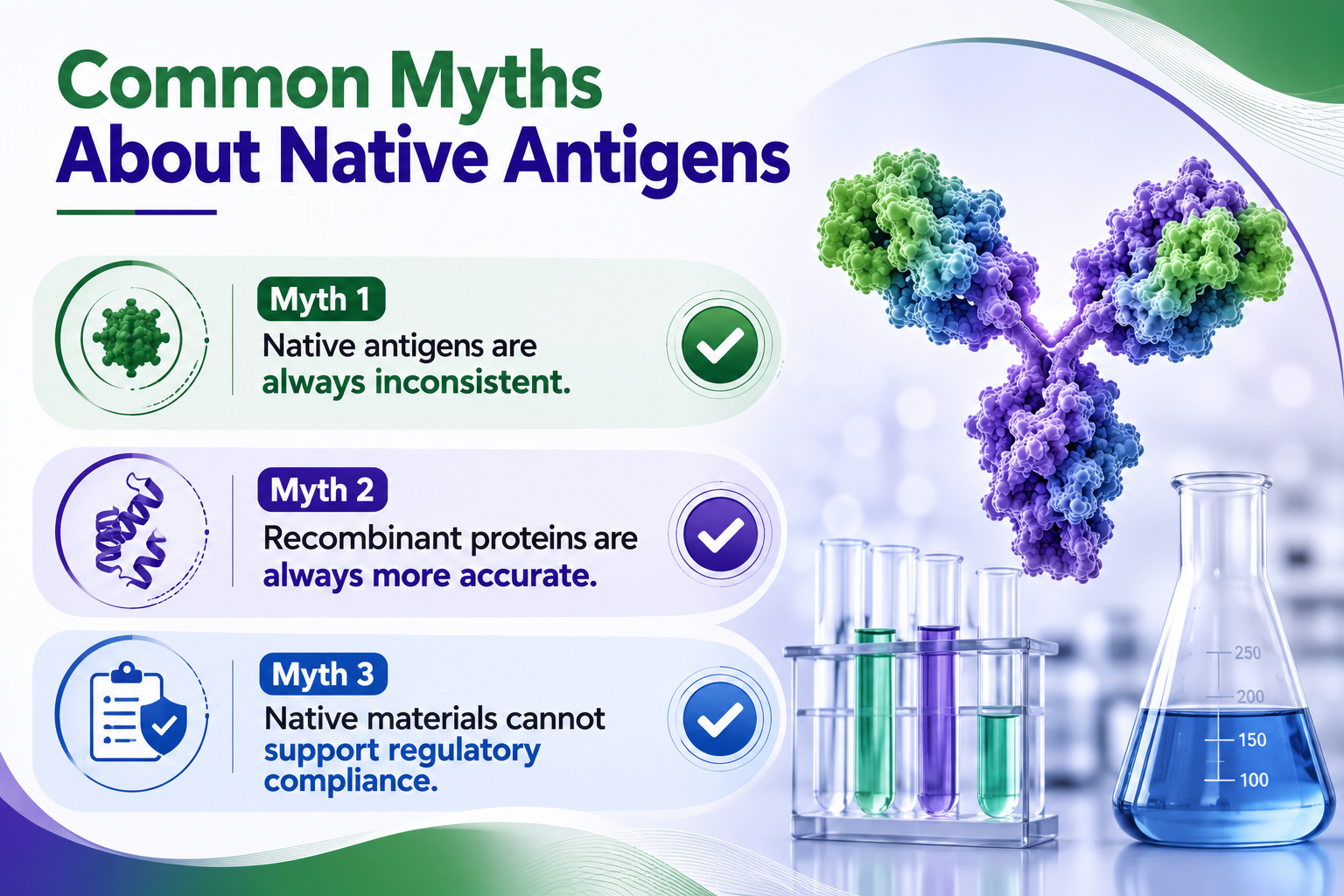
Common Myths About Native Antigens
Despite their widespread use in diagnostics, several misconceptions still surround native biological materials.
Myth 1: Native antigens are always inconsistent.
Modern purification technologies, rigorous donor screening, standardized manufacturing processes, and comprehensive quality control enable reputable manufacturers to produce highly consistent native antigen preparations with excellent lot-to-lot reproducibility.
Myth 2: Recombinant proteins are always more accurate.
Recombinant proteins offer manufacturing consistency but do not automatically guarantee better clinical performance. Diagnostic accuracy depends on how closely the antigen mimics the biological target found in patient samples.
Myth 3: Native materials cannot support regulatory compliance
Manufacturers operating under internationally recognized quality systems, including ISO 13485, implement strict traceability, documentation, validation, and quality assurance processes that support regulatory expectations for diagnostic raw materials.
Understanding these distinctions allows developers to make evidence-based decisions rather than relying on common assumptions.
What Should You Look for in a Native Antigen Supplier?
The quality of a diagnostic assay depends not only on antigen selection but also on the expertise and quality systems of the supplier.
An ideal native antigen manufacturing partner should provide:
- Carefully screened and ethically sourced biological materials.
- Complete donor traceability and documentation.
- Robust purification and characterization processes.
- Consistent batch-to-batch performance.
- Comprehensive analytical validation.
- Regulatory-compliant manufacturing under ISO-certified quality systems.
- Reliable long-term supply for commercial-scale production.
Working with an experienced supplier helps minimize variability, streamline assay development, and support regulatory submissions.
Supporting IVD Innovation with High-Quality Native and Recombinant Antigens
For over two decades, Yashraj Biotechnology Ltd. (YBL) has been supporting diagnostic manufacturers worldwide by supplying high-quality biological raw materials for in vitro diagnostic applications.
YBL offers a broad portfolio that includes:
- Native human plasma proteins
- Disease-state plasma and serum panels
- Purified native antigens
- Recombinant proteins
- Antibodies
- Calibrators and controls
- Custom biological products for assay development
Every product is manufactured using stringent quality systems, advanced purification technologies, and comprehensive quality control procedures to ensure consistency, traceability, and reliability.
By combining deep expertise in plasma-derived biologicals with recombinant technologies, YBL enables IVD manufacturers to select the most appropriate material for their specific diagnostic applications while maintaining the highest standards of analytical performance.
Conclusion
Choosing between native and recombinant antigens is not simply a manufacturing decision—it is a strategic decision that directly impacts diagnostic accuracy, clinical confidence, and patient outcomes.
Recombinant antigens have transformed diagnostic development through scalability, consistency, and engineering flexibility. However, native antigens continue to provide unmatched biological authenticity, preserving the structural complexity, post-translational modifications, and epitope diversity that often determine real-world assay performance.
Applications requiring highly commutable reference materials, clinically relevant calibration, or maximum antibody recognition frequently benefit from native antigen preparations. At the same time, recombinant technologies remain indispensable for many research, development, and high-volume manufacturing applications.
As precision diagnostics continue to evolve, successful assay developers increasingly recognize that selecting the right antigen is about choosing the material best suited to the clinical objective—not simply the easiest to manufacture.
By partnering with experienced biological material suppliers such as Yashraj Biotechnology Ltd., diagnostic manufacturers gain access to scientifically validated native and recombinant antigen solutions that support robust assay development, regulatory compliance, and improved diagnostic outcomes.

Subscribe to YBL Monthly Digital Newsletter
Stay connected with Yashraj Biotechnology Ltd. (YBL) for the latest updates, innovations, news and upcoming events.