.jpg)



Fundamentals for Understanding and Controlling Column Performance in Chromatography
Introduction
Chromatography is one of the most powerful separation techniques used in biotechnology, pharmaceutical manufacturing, and in vitro diagnostics (IVD). Whether purifying recombinant proteins, monoclonal antibodies, enzymes, antigens, or other biologically active molecules, chromatography enables scientists to isolate target molecules with high purity, yield, and reproducibility.
Although chromatography may appear straightforward—a liquid flowing through a packed column—the underlying science is far more complex. As molecules travel through the column, they are continuously influenced by fluid flow, diffusion, and interactions with the stationary phase (chromatography resin). The balance between these physical processes determines whether a separation produces sharp, well-resolved peaks or broad, overlapping bands that compromise product quality.
Successful chromatographic separations therefore depend not only on selecting the appropriate resin but also on understanding the physical principles governing column performance. Factors such as slurry preparation, packing quality, flow rate, bed stability, and mass transfer all contribute to the efficiency and reproducibility of a chromatographic process.
By understanding these principles, chromatography becomes a predictable, scalable process rather than one based on trial and error. For manufacturers developing biological products or diagnostic reagents, optimizing column performance leads to higher purification efficiency, improved product consistency, reduced manufacturing costs, and easier scale-up from laboratory research to commercial production.
Why Column Performance Matters
Every chromatographic separation aims to achieve one objective—isolating the desired molecule while minimizing impurities.
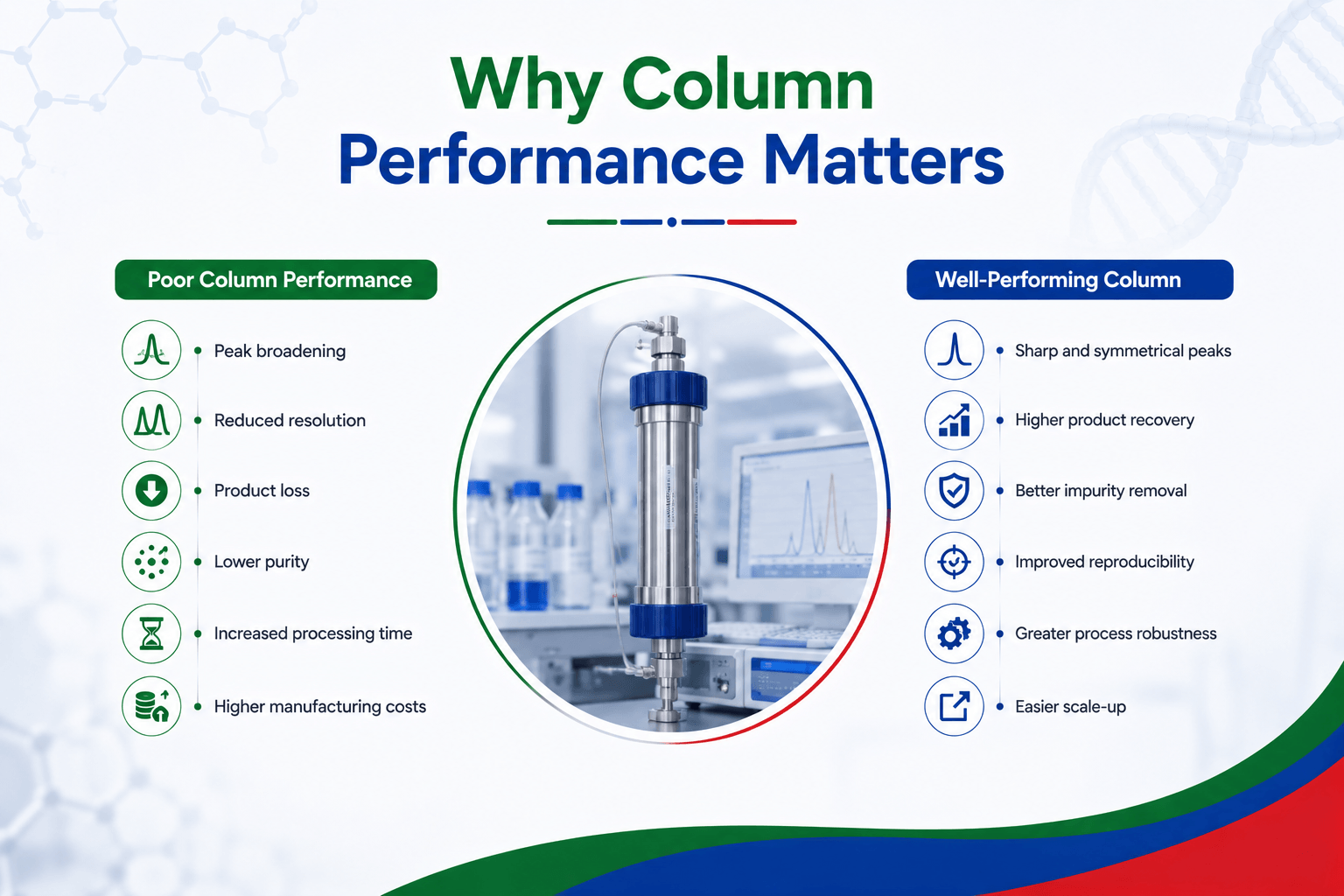
Regardless of whether the target molecule is an antibody, antigen, recombinant protein, enzyme, or biomarker, poor column performance can lead to:
- Peak broadening
- Reduced resolution
- Product loss
- Lower purity
- Increased processing time
- Higher manufacturing costs
Conversely, a well-performing chromatography column delivers:
- Sharp and symmetrical peaks
- Higher product recovery
- Better impurity removal
- Improved reproducibility
- Greater process robustness
- Easier scale-up
Column performance is therefore one of the most critical quality attributes in downstream bioprocessing.
Rather than relying solely on resin selection, manufacturers must optimize every aspect of column preparation and operation to achieve consistent chromatographic performance throughout repeated purification cycles.
Understanding Band Broadening in Chromatography
One of the most important concepts in chromatography is band broadening.
Ideally, every injected sample would travel through the column as a narrow, compact band before emerging as a sharp chromatographic peak. In reality, molecules naturally spread as they move through the packed bed.

This spreading occurs because molecules experience several physical phenomena simultaneously:
- Different flow paths within the packed resin
- Molecular diffusion
- Resistance while entering and leaving resin pores
- Variations in packing density
- Changes in flow velocity
As band broadening increases, neighboring peaks begin to overlap, making it increasingly difficult to separate closely related molecules.
The objective of column optimization is therefore to minimize band broadening while maintaining acceptable processing speed.
Understanding the physical causes of peak dispersion allows scientists to identify which operating parameters require optimization.
The Van Deemter Equation: Balancing Flow and Efficiency
One of the most widely used models for understanding chromatographic efficiency is the Van Deemter equation.
Rather than treating chromatography as a simple flow process, the Van Deemter equation explains how multiple physical mechanisms contribute to peak broadening.
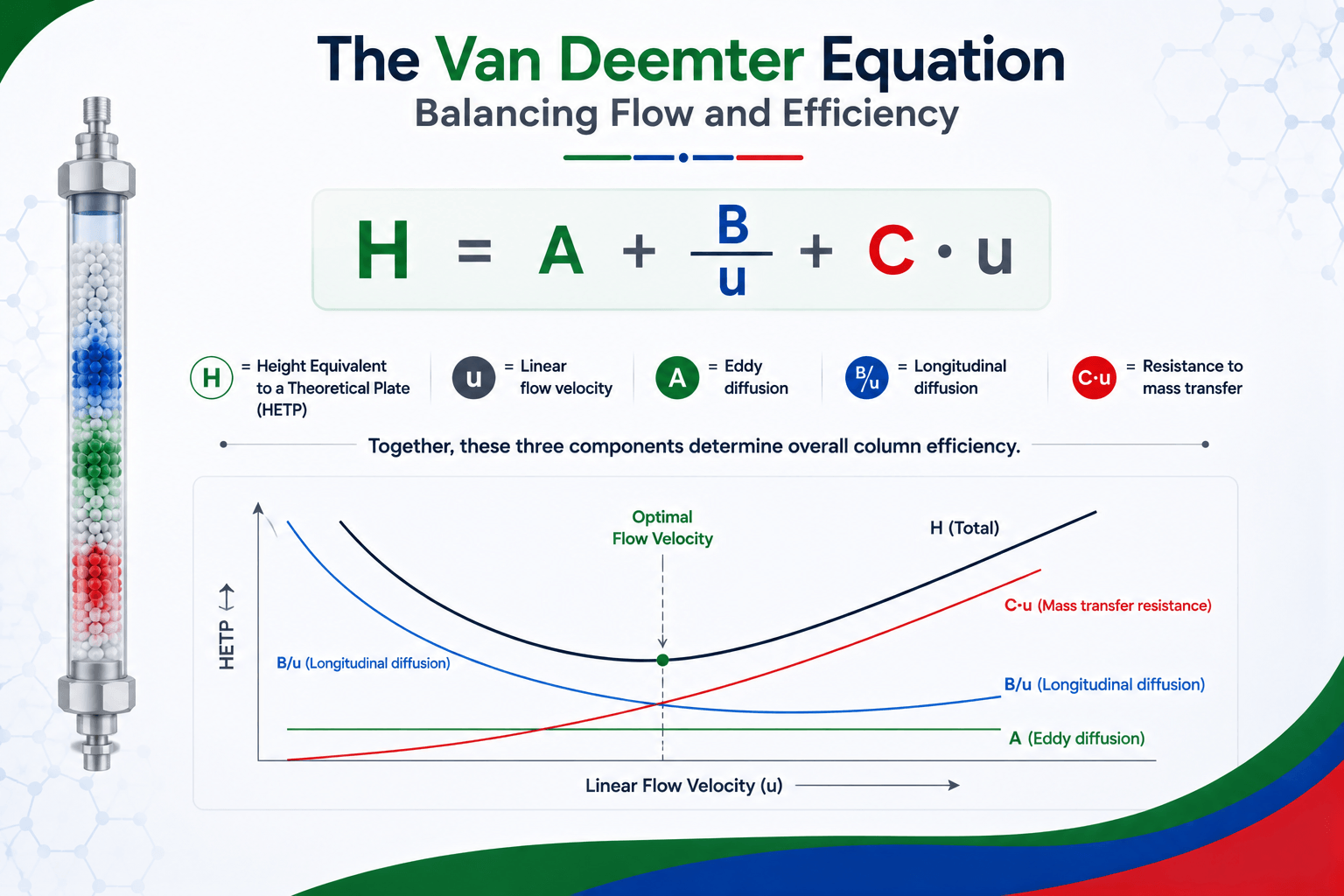
The equation is represented as:
H = A + B/u + C·u
Where:
- H = Height Equivalent to a Theoretical Plate (HETP)
- u = Linear flow velocity
- A = Eddy diffusion
- B/u = Longitudinal diffusion
- C·u = Resistance to mass transfer
Together, these three components determine overall column efficiency.
1. Eddy Diffusion (A Term)
As liquid moves through the packed resin bed, molecules do not all follow identical paths.
Some molecules travel through shorter channels, while others move through longer or more tortuous routes.
If the column packing is uneven, these path differences become more pronounced, causing molecules to exit the column at different times.
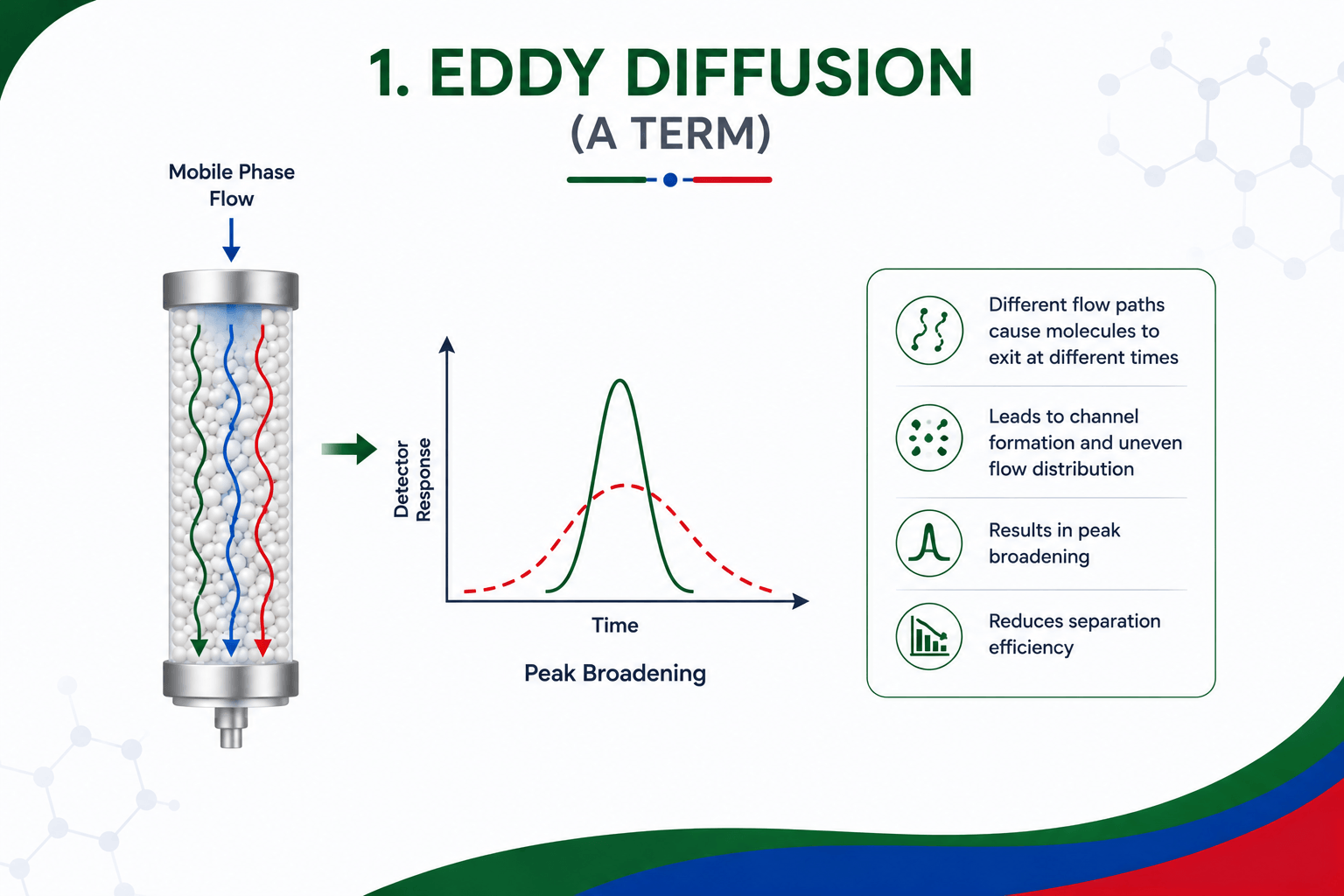
Poor packing therefore results in:
- Channel formation
- Uneven flow distribution
- Peak broadening
- Reduced separation efficiency
Unlike other factors, eddy diffusion is largely independent of flow rate.
Once a poorly packed column has been created, increasing or decreasing flow cannot compensate for these structural defects.
This highlights why proper column packing is fundamental to chromatographic performance.
2. Longitudinal Diffusion (B/u Term)
Molecules naturally diffuse from regions of higher concentration toward regions of lower concentration.
When flow rates become excessively slow, molecules remain inside the column for longer periods, allowing diffusion to spread the sample band.
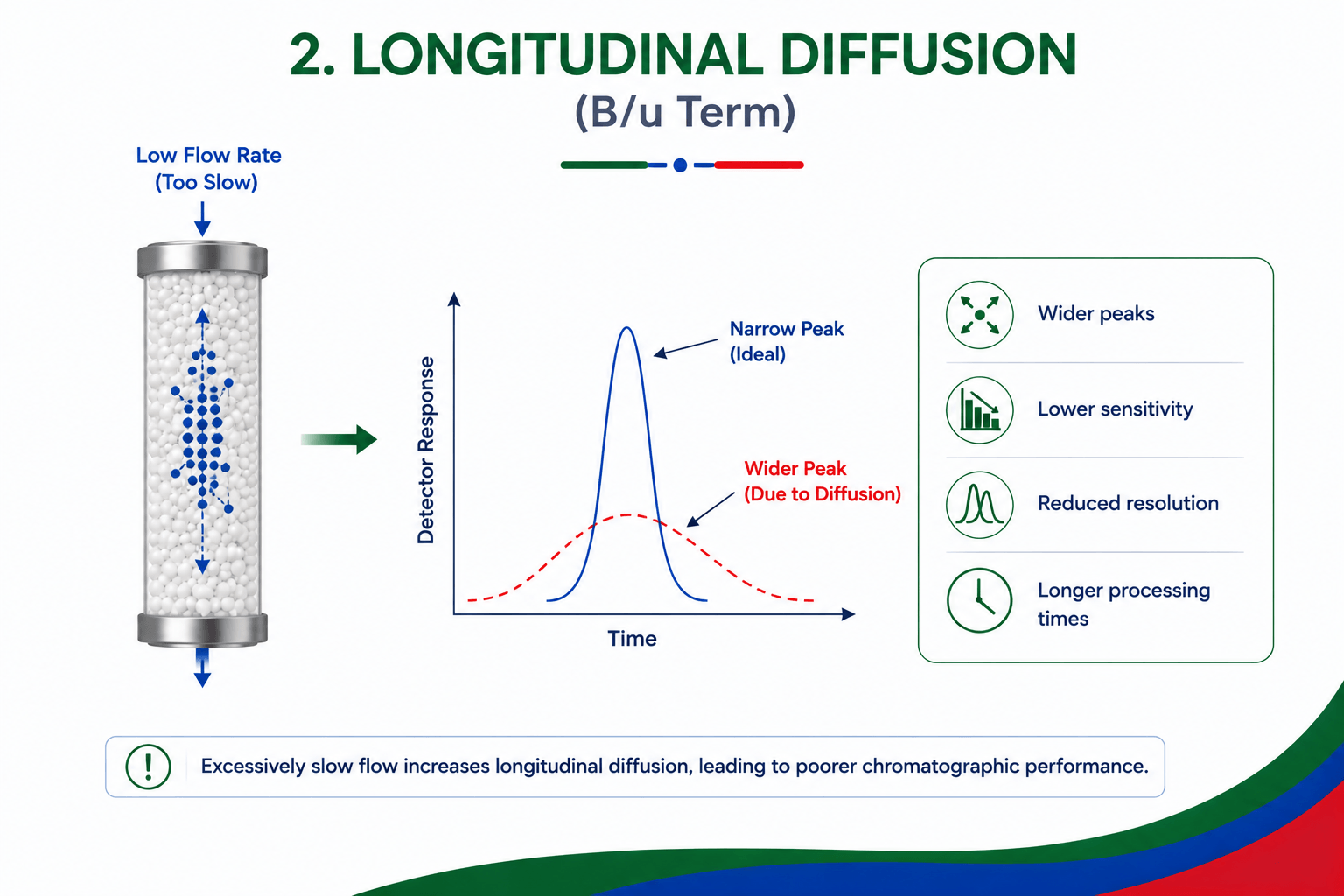
Instead of producing narrow peaks, the analyte gradually disperses throughout the mobile phase.
Consequences include:
- Wider peaks
- Lower sensitivity
- Reduced resolution
- Longer processing times
Although reducing flow may seem beneficial, excessively slow operation can actually worsen chromatographic performance because longitudinal diffusion becomes increasingly dominant.
3. Resistance to Mass Transfer (C·u Term)
At very high flow rates, the opposite problem occurs.
Molecules move through the column so quickly that they cannot fully diffuse into and out of the chromatography resin before being carried downstream.
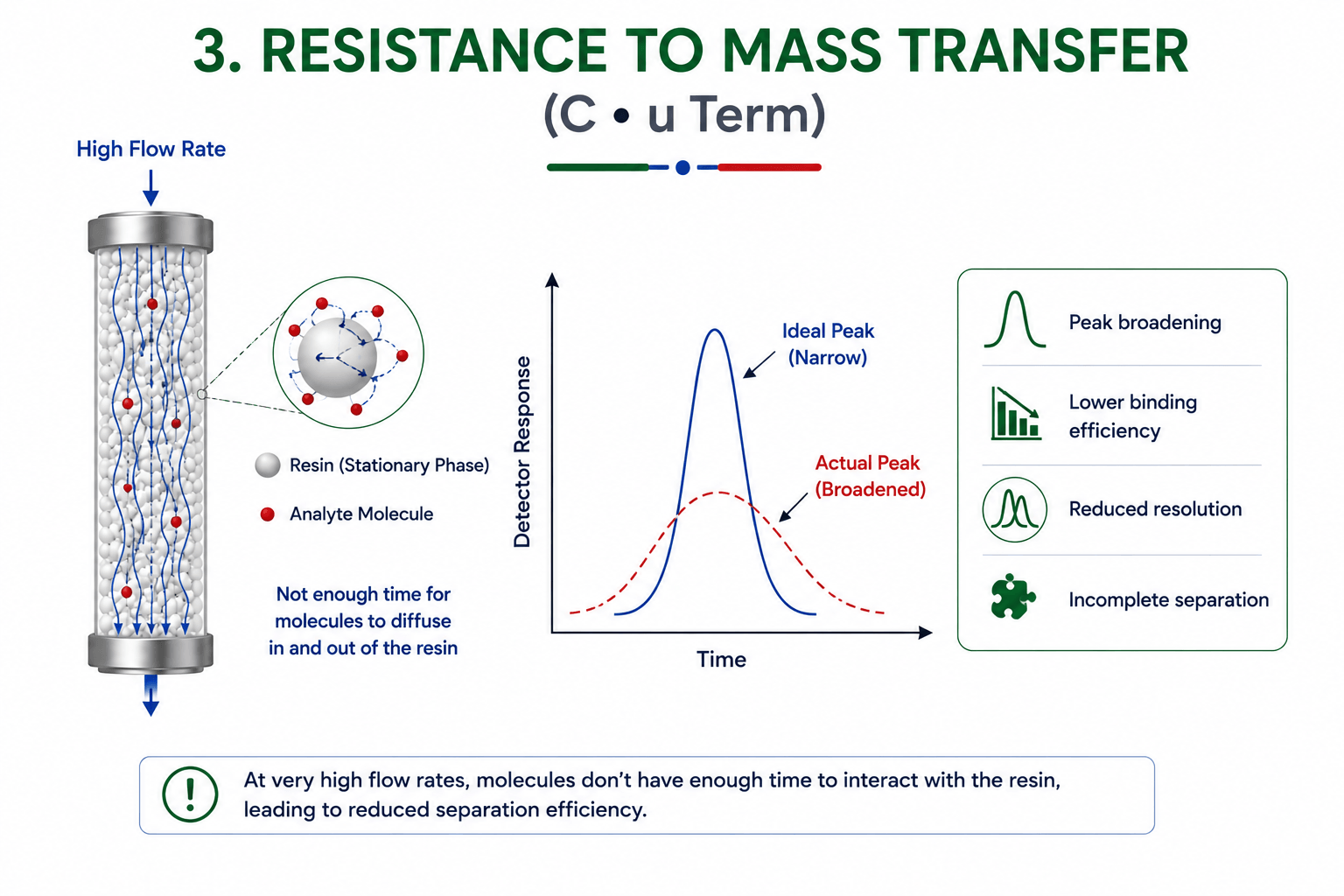
Incomplete interaction between the analyte and stationary phase reduces equilibrium, producing:
- Peak broadening
- Lower binding efficiency
- Reduced resolution
- Incomplete separation
This phenomenon becomes particularly important during protein purification, where large biomolecules diffuse more slowly than small molecules.
Finding the Optimal Flow Rate
The Van Deemter equation demonstrates that neither very slow nor very fast flow rates produce optimal separations.
Instead, every chromatography column possesses an optimal linear velocity where total band broadening is minimized.
Operating near this optimum provides several advantages:
- Maximum column efficiency
- Sharper chromatographic peaks
- Higher resolution
- Improved productivity
- Better reproducibility
In practical process development, scientists balance this optimal flow with other considerations such as system pressure, resin compression limits, and manufacturing throughput.
Slurry Preparation: The Foundation of Column Performance
Long before chromatography begins, column performance is largely determined during slurry preparation.
Improper slurry preparation is one of the most common causes of poor chromatographic performance.
The slurry consists of chromatography resin suspended in packing buffer before it is transferred into the column.
For successful packing, the suspension must remain completely homogeneous.
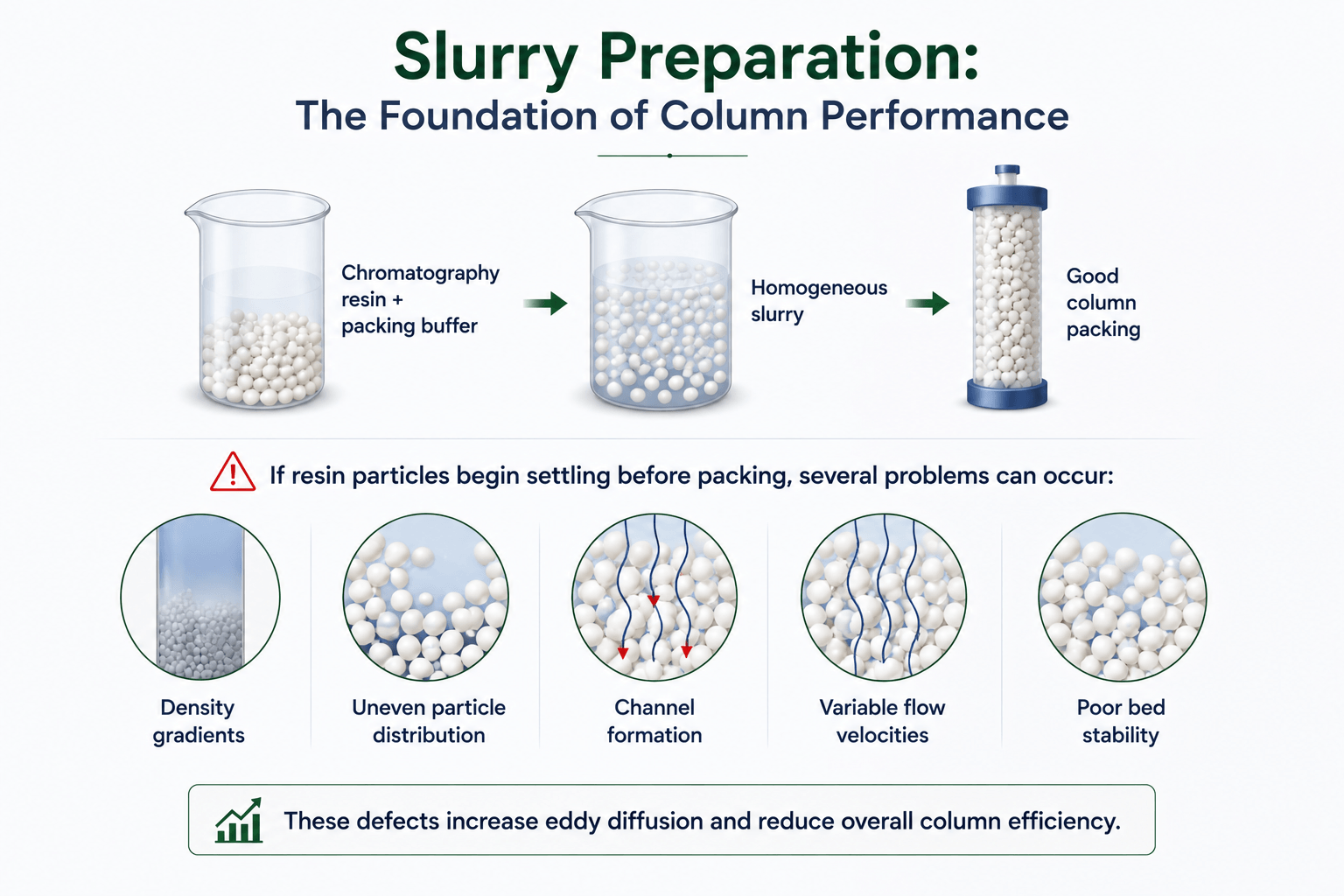
If resin particles begin settling before packing, several problems can occur:
- Density gradients
- Uneven particle distribution
- Channel formation
- Variable flow velocities
- Poor bed stability
These defects increase eddy diffusion and reduce overall column efficiency.
Best Practices for Slurry Preparation
High-quality slurry preparation includes several essential process controls:
- Correct slurry concentration (typically 50–70% settled resin)
- Continuous gentle mixing
- Complete removal of trapped air
- Proper degassing
- Uniform particle suspension before transfer
Maintaining a homogeneous slurry allows resin particles to settle evenly during packing, producing a mechanically stable chromatography bed.
Well-prepared slurries also improve:
- Pressure stability
- Batch-to-batch reproducibility
- Packing consistency
- Resin lifetime
Because column packing quality depends directly on slurry quality, careful preparation significantly reduces downstream troubleshooting and process variability.
Column Packing: Building a Stable Chromatography Bed
Column packing is one of the most critical stages in chromatography because it establishes the physical structure through which every sample will pass.
An uneven or unstable packed bed introduces flow irregularities that cannot easily be corrected during operation.
Modern chromatography systems commonly use flow packing, where the mobile phase is pumped through the resin during packing.
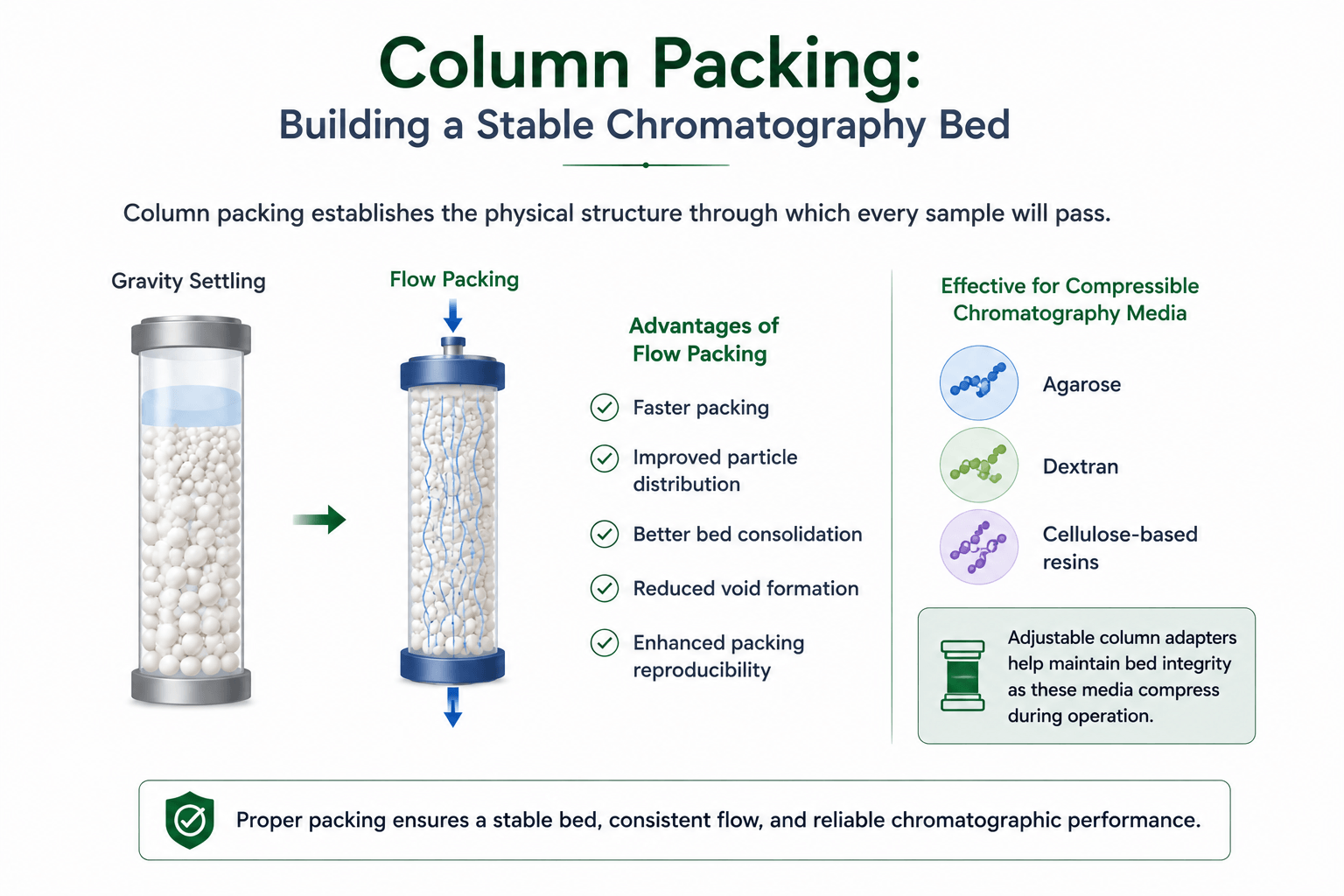
Compared with gravity settling alone, flow packing offers several advantages:
- Faster packing
- Improved particle distribution
- Better bed consolidation
- Reduced void formation
- Enhanced packing reproducibility
Flow packing is particularly effective for compressible chromatography media such as:
- Agarose
- Dextran
- Cellulose-based resins
These soft gel materials continue to compress slightly during operation, making adjustable column adapters valuable for maintaining bed integrity.
Packing Quality: Compression Factor and Packing Factor
Even after a chromatography column has been packed, its quality must be assessed before it is used for purification. Two important parameters help evaluate whether the resin bed has been packed correctly: Compression Factor (CF) and Packing Factor (PF).
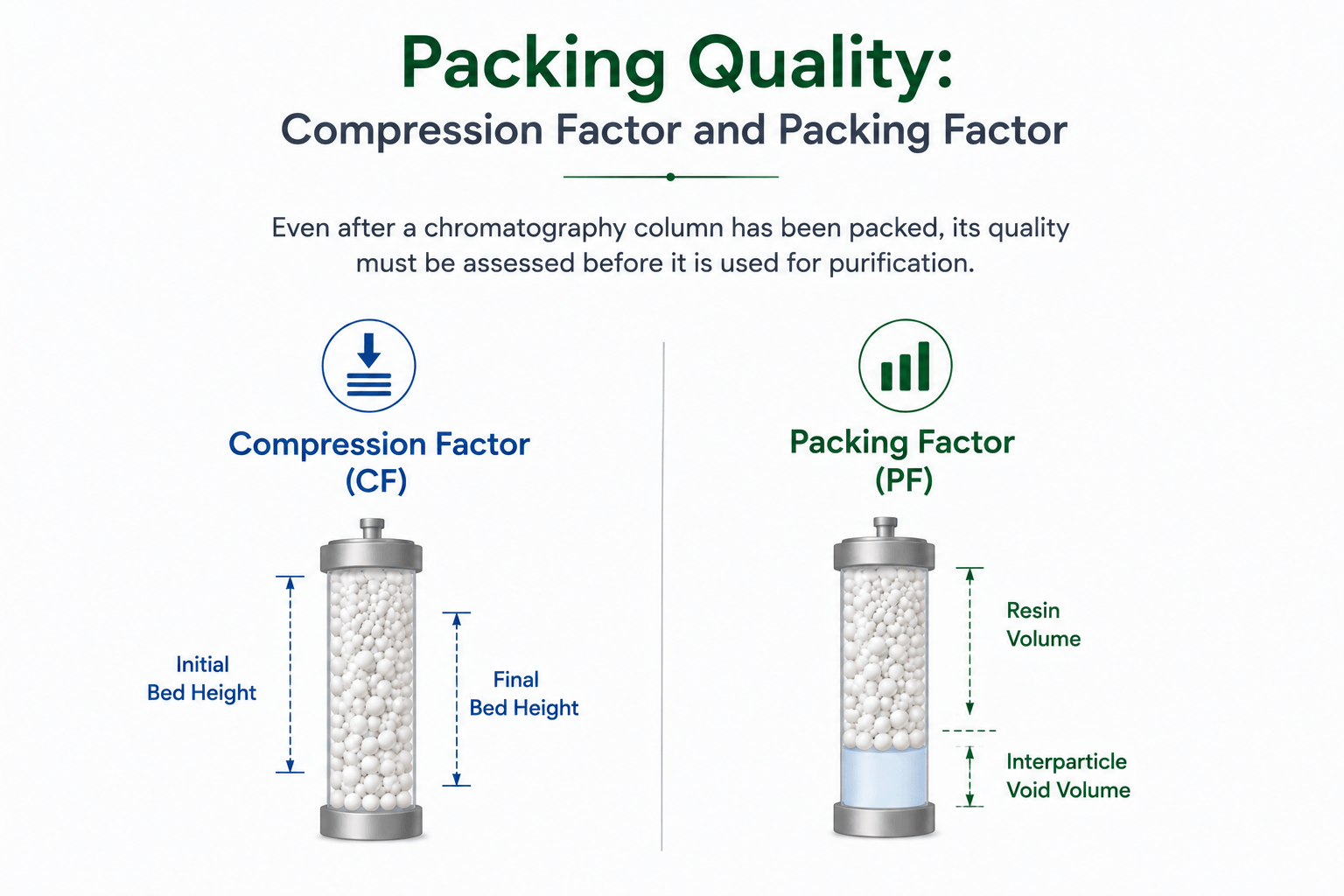
Compression Factor (CF)
Compression Factor compares the resin bed height after gravity settling with the final packed bed height.
It provides an indication of how much the resin compresses during packing.
A consistent compression factor suggests that the packing process has produced a stable and reproducible chromatography bed.
Excessive compression may indicate:
- Over-packed resin
- Increased back pressure
- Reduced flow distribution
Insufficient compression may result in:
- Voids within the column
- Channel formation
- Poor separation efficiency
Packing Factor (PF)
Packing Factor compares the consolidated bed height after flow packing with the final packed bed height.
Unlike Compression Factor, Packing Factor reflects the actual operating conditions experienced during chromatography.
Maintaining an appropriate Packing Factor helps ensure:
- Uniform bed density
- Stable flow characteristics
- Reduced channeling
- Improved reproducibility
- Consistent chromatographic performance
Together, CF and PF provide valuable indicators of column packing quality before purification begins.
Column Qualification: Verifying Column Performance
Before a chromatography column is approved for routine use, its performance must be verified through column qualification.
Column qualification confirms that the packed bed will provide efficient, reproducible separations throughout multiple purification cycles.
Rather than evaluating protein purification directly, scientists typically perform qualification using a non-interacting tracer molecule.
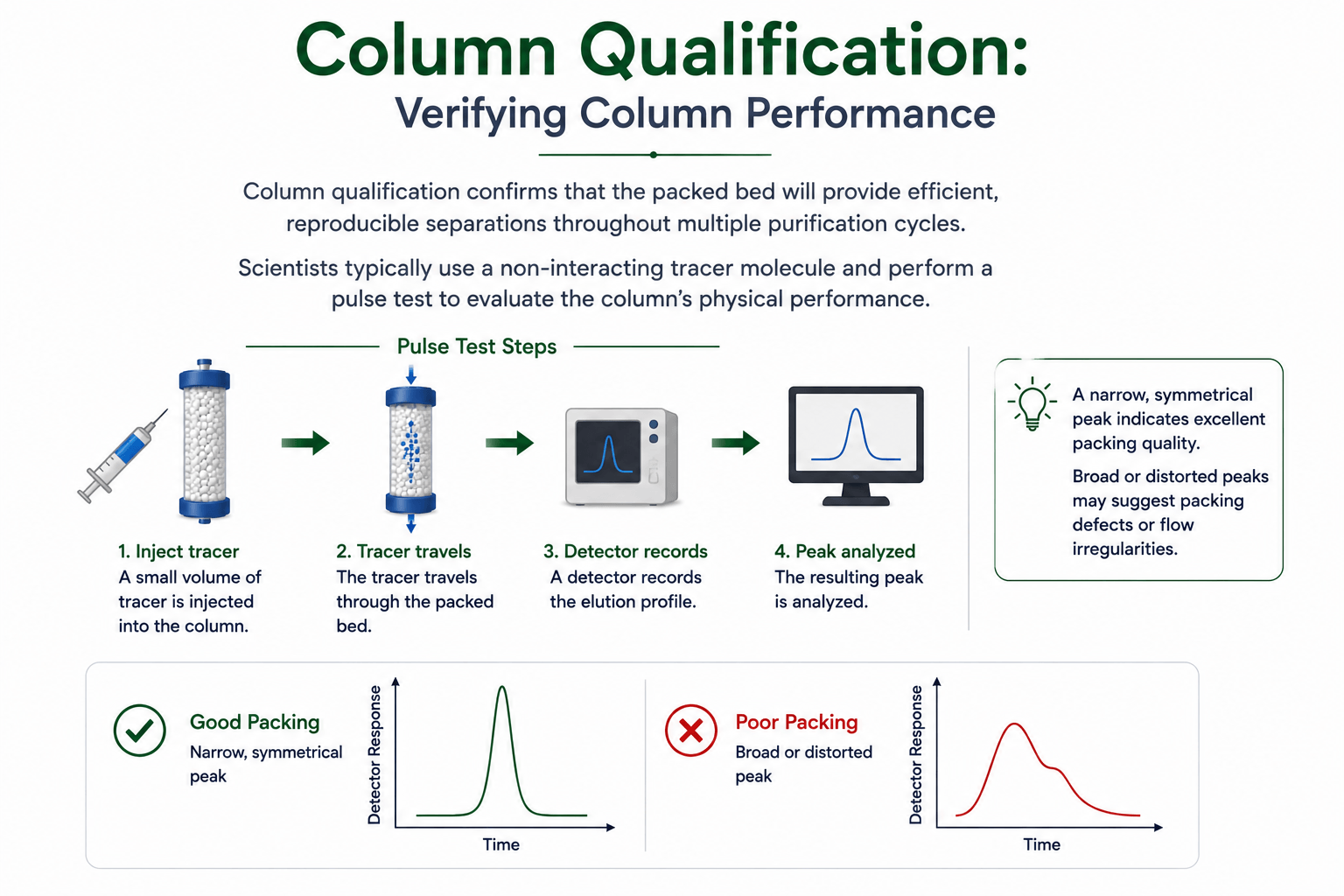
The tracer travels through the column without binding to the chromatography resin, allowing the test to measure only the column's physical performance.
The most common qualification technique is the pulse test.
During a pulse test:
- A small volume of tracer is injected into the column.
- The tracer travels through the packed bed.
- A detector records the elution profile.
- The resulting chromatographic peak is analyzed.
A narrow, symmetrical peak indicates excellent packing quality, while broad or distorted peaks may suggest packing defects or flow irregularities.
Number of Theoretical Plates (N): Measuring Column Efficiency
Column efficiency is commonly expressed as the Number of Theoretical Plates (N).
Although chromatography columns are not physically divided into plates, this concept provides a convenient way to describe separation performance.
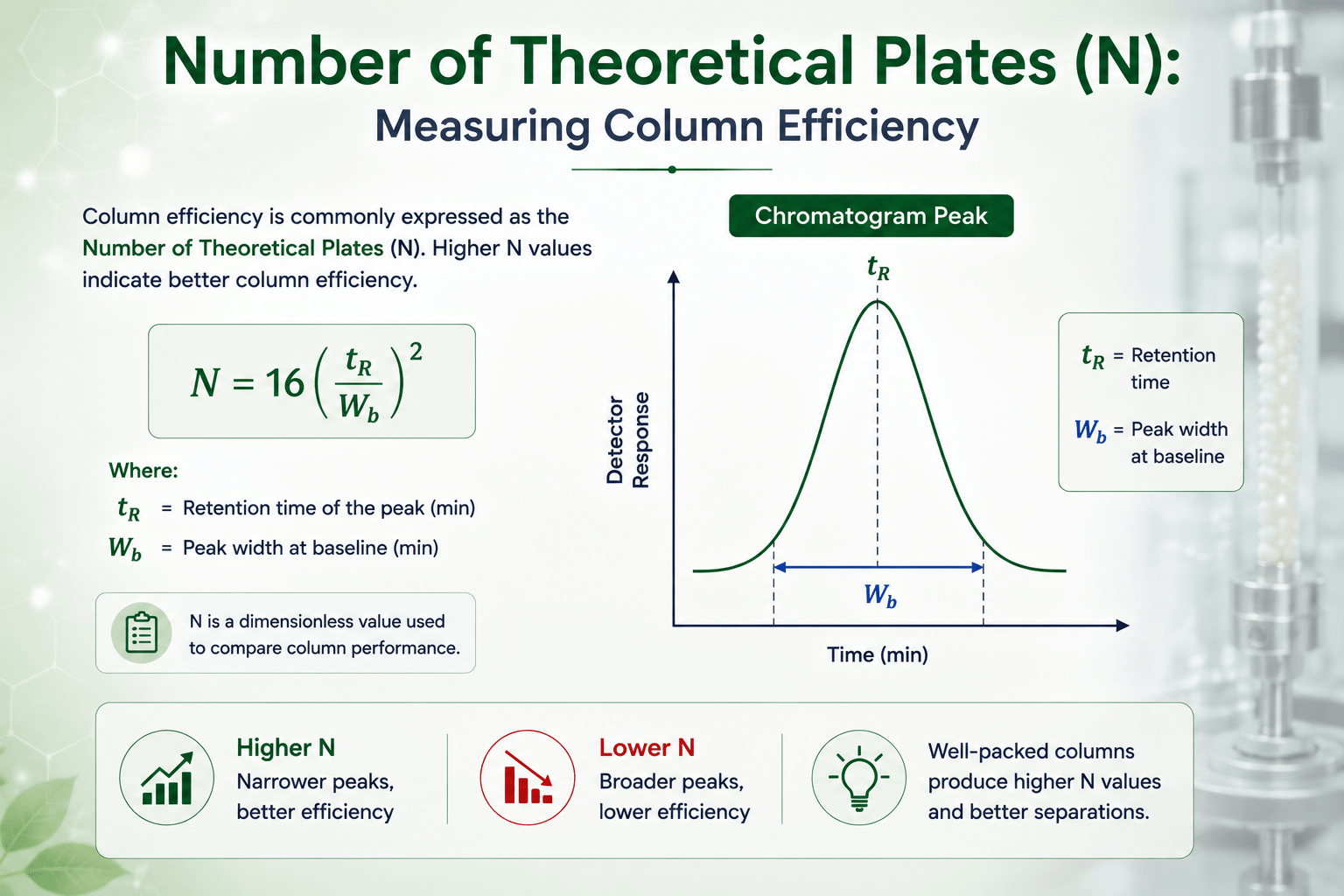
Higher plate numbers indicate:
- Sharper peaks
- Lower band broadening
- Better separation
- Improved purification efficiency
Low plate numbers generally suggest:
- Poor packing
- Flow channeling
- Excessive diffusion
- Resin deterioration
Routine monitoring of theoretical plates allows manufacturers to verify consistent column performance throughout the production lifecycle.
Peak Asymmetry: Evaluating Peak Shape
Peak shape provides another important indication of column health.
Ideally, chromatographic peaks should be symmetrical and closely resemble a Gaussian distribution.
Peak asymmetry may indicate:
- Channel formation
- Poor column packing
- Resin degradation
- Secondary molecular interactions
- Flow distribution problems
Typical observations include:
- Peak tailing – analytes elute more slowly than expected.
- Peak fronting – analytes elute earlier than expected.
Monitoring peak symmetry during routine operation helps identify performance deterioration before purification quality is affected.
Column Volume and Linear Flow Rate
Once the chromatography column has been successfully packed, one of the first parameters determined is Column Volume (CV).
Column volume defines:
- Residence time
- Buffer consumption
- Process scalability
- Sample loading capacity
Rather than expressing purification steps in milliliters, chromatography processes are typically described in Column Volumes (CVs).
For example:
- 5 CV Equilibration
- 10 CV Washing
- 3 CV Elution
Using column volumes allows protocols to be transferred directly from laboratory-scale columns to manufacturing-scale systems without changing process logic.
Linear Flow Rate
In addition to volumetric flow, chromatography systems use linear flow rate (commonly expressed as cm/hour).
Linear velocity standardizes flow across different column diameters, allowing process developers to scale purification methods while maintaining identical chromatographic conditions.
Maintaining consistent linear velocity ensures:
- Similar residence time
- Comparable binding kinetics
- Predictable scale-up
- Reproducible purification performance
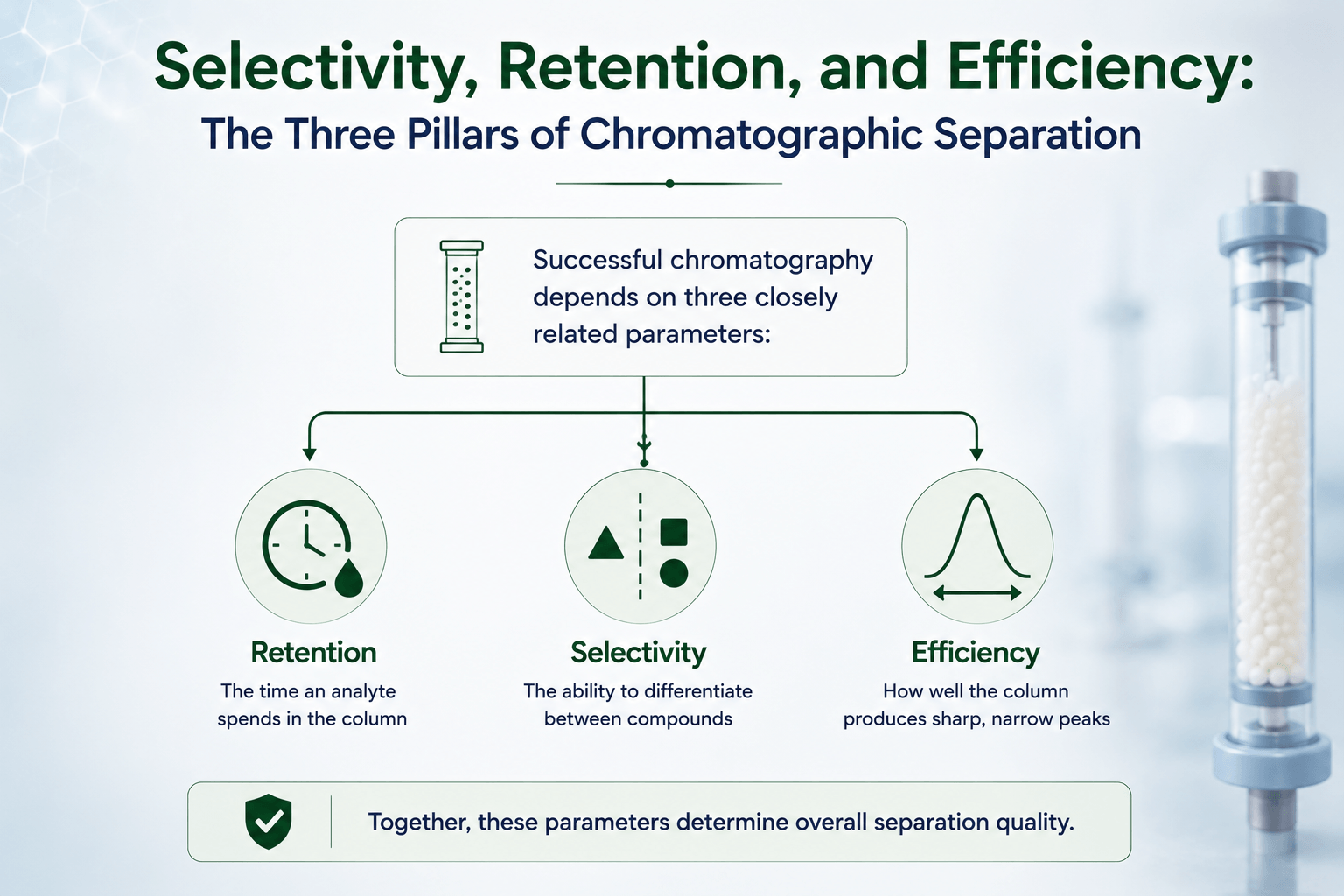
Selectivity, Retention, and Efficiency: The Three Pillars of Chromatographic Separation
Successful chromatography depends on three closely related parameters:
- Retention
- Selectivity
- Efficiency
Together, these determine overall separation quality.
Retention Factor (k)
Retention describes how strongly a molecule interacts with the chromatography resin.
A molecule with higher retention remains inside the column longer before eluting.
Retention is influenced by several operating conditions, including:
- Buffer pH
- Salt concentration
- Organic solvent composition
- Ligand chemistry
- Temperature
Optimizing retention improves purification while avoiding excessively long processing times.
Selectivity (α)
Selectivity measures how differently two molecules interact with the stationary phase.
Even very small improvements in selectivity can dramatically improve chromatographic resolution.
Selectivity depends primarily on:
- Resin chemistry
- Ligand type
- Buffer composition
- pH
- Salt identity
- Temperature
Unlike efficiency, selectivity is largely governed by chemistry rather than hardware.
If two molecules interact almost identically with the resin, increasing column length alone cannot produce complete separation.
Efficiency (N)
Efficiency reflects how well the chromatography column minimizes band broadening.
High efficiency produces:
- Narrow peaks
- Better resolution
- Greater reproducibility
- Improved purification yields
Efficiency is commonly expressed using:
- Number of Theoretical Plates (N)
- Height Equivalent to a Theoretical Plate (HETP)
Lower HETP values indicate higher-performing chromatography columns.
Resolution: The Ultimate Measure of Separation
The ultimate objective of chromatography is achieving adequate resolution between neighboring peaks.
Resolution combines the effects of:
- Column efficiency
- Retention
- Selectivity
High-resolution chromatography provides:
- Better impurity removal
- Increased product purity
- Easier fraction collection
- Higher manufacturing consistency
Improving only one parameter rarely produces optimal results.
Instead, successful method development balances retention, selectivity, and efficiency simultaneously.
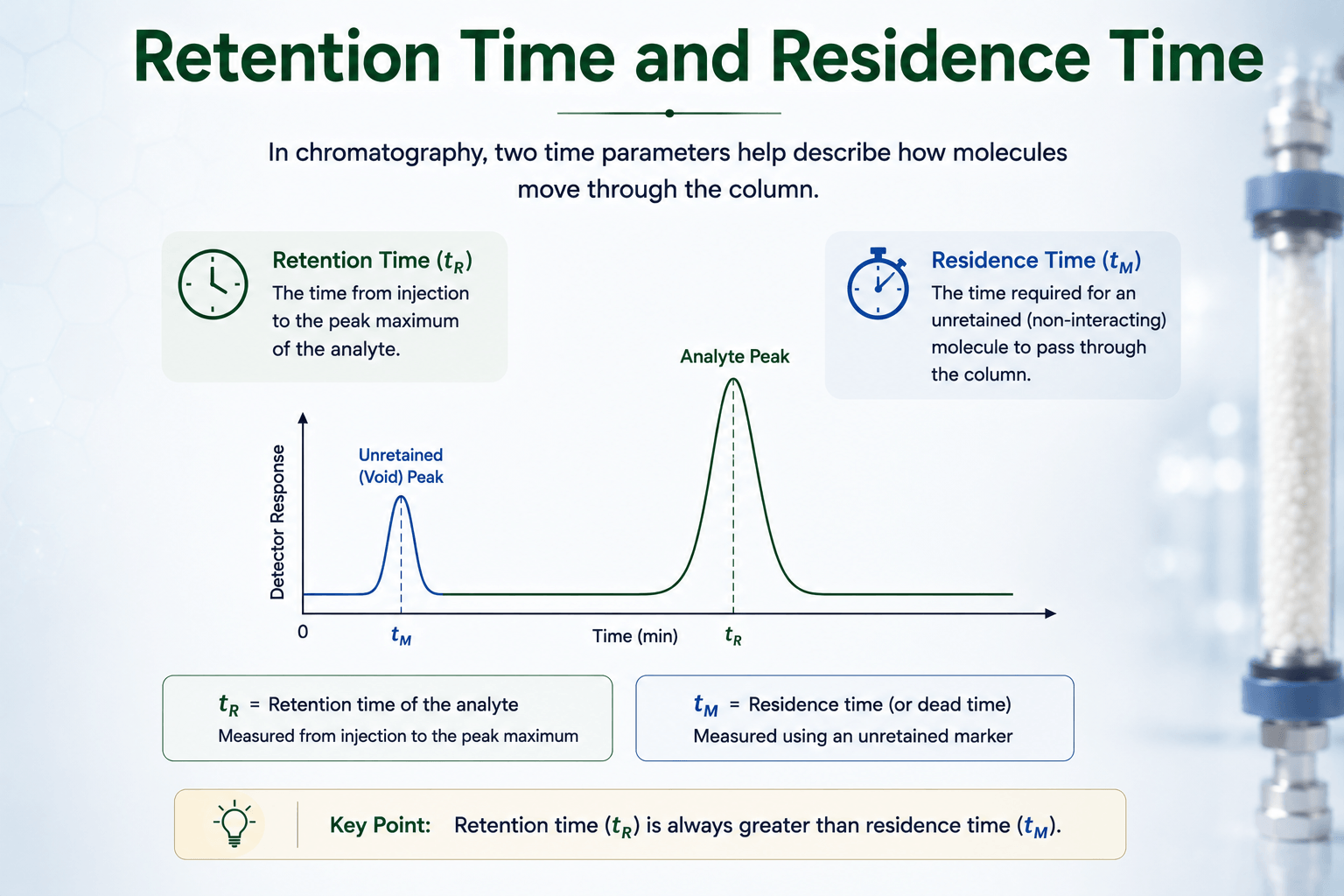
Retention Time and Residence Time
Two closely related concepts are frequently encountered during chromatography.
Retention Time
Retention time refers to the interval between sample injection and the appearance of the peak maximum at the detector.
It represents how long an analyte remains inside the chromatographic system.
Retention time depends upon:
- Flow rate
- Resin chemistry
- Binding strength
- Mobile phase composition
Residence Time
Residence time describes how long the mobile phase remains inside the chromatography column.
It is determined primarily by:
- Column volume
- Flow rate
Residence time strongly influences:
- Protein binding
- Elution efficiency
- Mass transfer
- Overall purification performance
Maintaining consistent residence time is particularly important during process scale-up.
Static vs Dynamic Protein Binding Capacity
One of the most important characteristics of any chromatography resin is its ability to bind target proteins.
Two different measurements are commonly used.
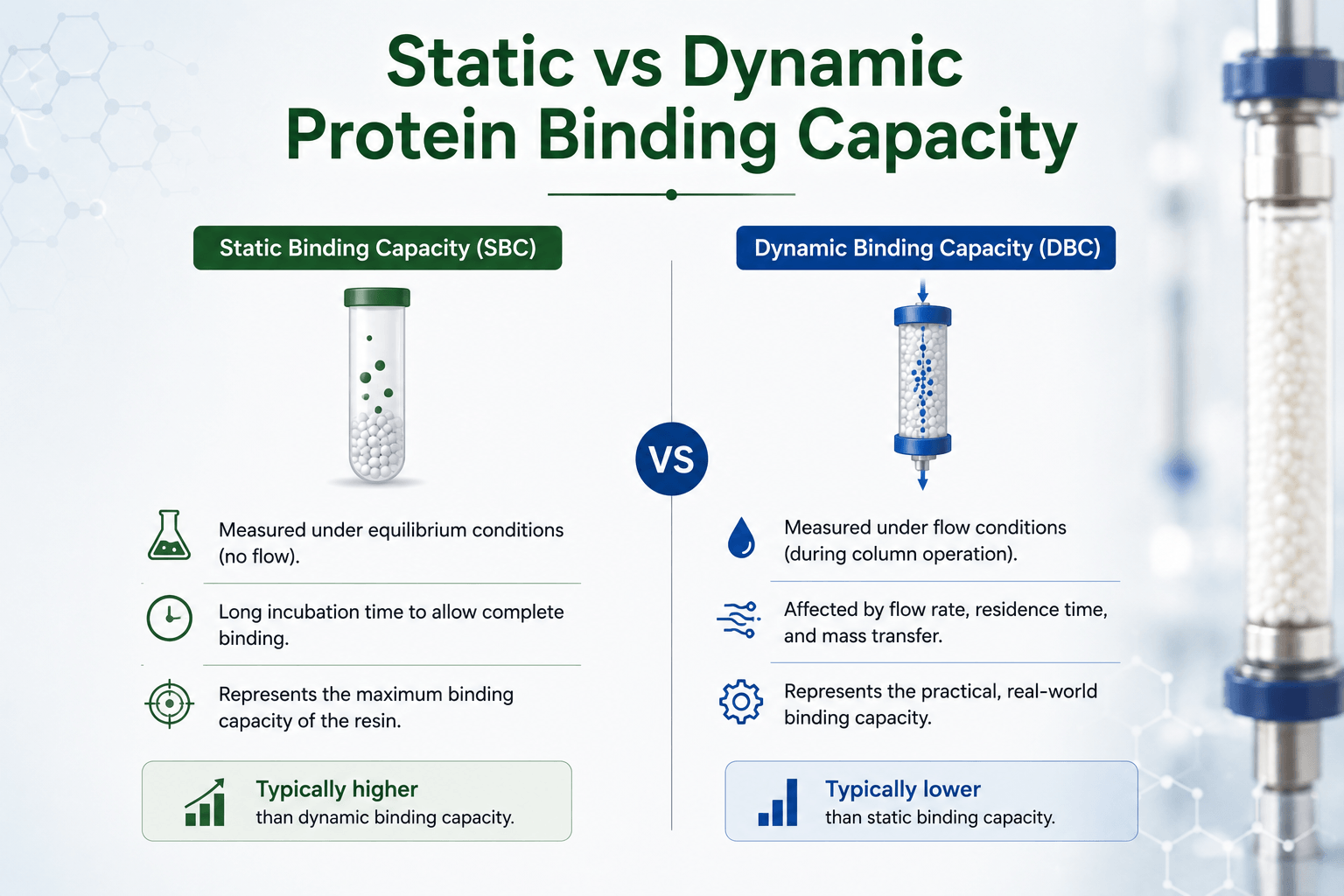
Static Binding Capacity (SBC)
Static Binding Capacity is determined under equilibrium conditions, usually in a batch experiment.
It represents the maximum amount of protein a resin can bind when sufficient time is available for complete interaction.
Static capacity is useful for comparing different chromatography media but does not fully represent real manufacturing conditions.
Dynamic Binding Capacity (DBC)
Dynamic Binding Capacity measures protein binding during actual column operation.
Unlike static measurements, DBC accounts for:
- Flow rate
- Residence time
- Mass transfer limitations
- Breakthrough behavior
Dynamic binding capacity is therefore considered the more practical measurement for industrial chromatography.
Higher DBC enables manufacturers to:
- Increase productivity
- Load more protein per cycle
- Reduce processing time
- Improve manufacturing efficiency
Because chromatography systems operate under continuous flow conditions, Dynamic Binding Capacity is generally the preferred specification when selecting purification resins.
Conclusion
Efficient chromatography depends on much more than selecting an appropriate resin. Column performance is influenced by a combination of physical principles, packing quality, operating conditions, and resin characteristics that collectively determine purification efficiency and reproducibility.
Understanding concepts such as the Van Deemter equation, slurry preparation, column packing, theoretical plates, selectivity, retention, resolution, and protein binding capacity allows scientists to transform chromatography from an empirical process into a predictable and scalable manufacturing platform.
At Yashraj Biotechnology Ltd., chromatography plays a vital role in the purification and production of high-quality biological materials for the global life sciences and IVD industries. By applying robust chromatographic principles, optimized process development, and stringent quality standards, Yashraj ensures consistent product purity, reproducibility, and manufacturing reliability.
As biologics, monoclonal antibodies, recombinant proteins, and advanced diagnostic reagents continue to evolve, mastering the fundamentals of column performance will remain essential for developing efficient, scalable, and regulatory-compliant purification processes.

Subscribe to YBL Monthly Digital Newsletter
Stay connected with Yashraj Biotechnology Ltd. (YBL) for the latest updates, innovations, news and upcoming events.